One Wedding and A Funeral

Wednesday, July 9, 2014  Prompt #66

My beautiful pictureThis weekend I attended both an unexpected funeral and an impromptu wedding. (I officiated!) Most definitely a cycle-of-life few days. The next three prompts will draw off these experiencse.

Funeral

Write about the first funeral you remember attending. Include small details that have stayed with you and emotions you experienced, such as grief, fear, confusion, or curiosity.


Further  Writing

Write a 300-word elegy or obituary for yourself or a character.


For Writing Groups

Write instructions for your own funeral or memorial service or for that of a character. Write them as an extended poem or flash non-fiction piece.


Rant 2.0

For Monday, July 7, 2014  Prompt #64

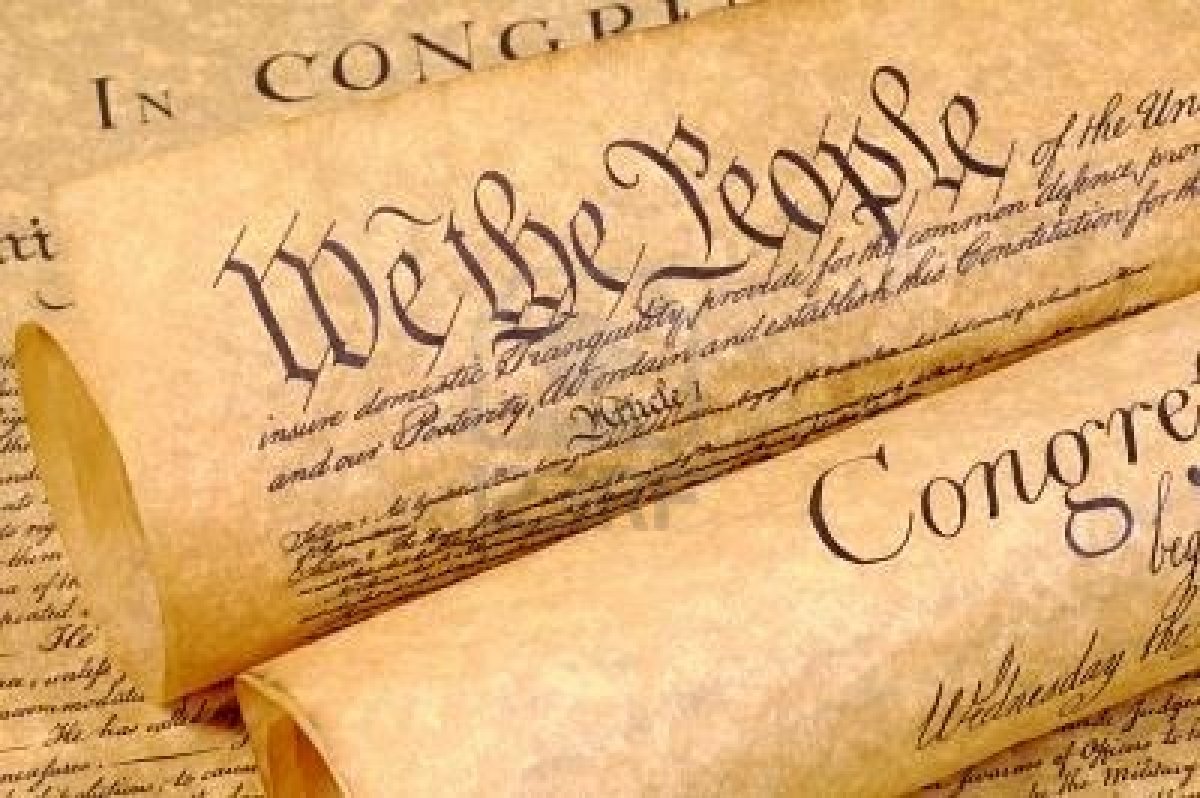
we the peopleToday’s prompt follows up on last week’s rant prompt. Again, hints for good rant writing.

  • Choose a topic about which you feel passionate.
  • Let yourself go off on tangents.
  • Let yourself be angry. Let yourself be funny.
  • Let yourself be both.
  • Keep your pencil moving and don’t erase or edit.
  • Write for at least ten minutes.

And now a quote from Allen Ginsberg: Concentrate on what you want to say to yourself and your friends. Follow your inner moonlight; don’t hide the madness. You say what you want to say when you don’t care who’s listening.  

Further Rant Writing: For Individuals and Groups

Manifesto: This exercise originated with my writing pal Frankie Rollins.  (You can find out more about her work here:  http://elizabethfrankierollins.com ) A manifesto is a public declaration of intentions, opinions, objectives, or motives. It can be issued by a government, community, organization, or person.

  • Here’s the beginning of one well-known manifesto: We the people of the United States, in order to form a more perfect union…. do ordain and establish this Constitution for the United States of America.
  • And here’s part of another one: We, the Representatives of the United States of America…solemnly declare That these United Colonies are Free and Independent States
  • And the end of another one: Let the ruling classes tremble at a communist revolution. The proletarians have nothing to lose but their chains. They have a world to win. Proletarians of all countries, unite!

Creating a Personal Manifesto in 4 Easy Steps

  1. List five communities that you identify with. For instance, I might write: East Coast Transplants. Writers. Lesbians. Birdwatchers. Collage artists.
  2. In a manifesto, you need to state your demands, desires, needs and dreams. Write down three other verbs for demand, desire, or need.
  3. Write Your Manifesto, beginning with the words:  We, the _____________________________ (fill in the group you want to represent), __________________________ (fill in a verb from step 2, then keep going…)

For example:

  • We the skateboarders require smoother asphalt.
  • We the freaks demand to be seen and heard.
  • We, your sisters and brothers, refuse to be silent.

4. Repeat your phrase, We the ______________, at least 6 times within your manifest.

My Sample: We, the writers, demand sharp pencils and open minds. Silenced too long, we demand long wooden desks and long stretches of time in which to percolate ideas, scribble out words, break apart sentences and put them together again. We, the writers, demand time to read. We seek quiet and solitude for one hour each day every day, we the writers, beseech this of our friends, neighbors and colleagues. In fact, we demand a national holiday solely and fully dedicated to the reading of books. As a first step, we the writers, demand triple funding for libraries so they can remain open 24 hours a day. While we are at it, we, the writers, insist upon new IRS tax codes, soundproof rooms, and stacks of dictionaries and legal pads in every coffeehouse. We the writers call for the end of blaring televisions in airports, loudmouth pundits at the lunch counter, discordant drummers by the creek. We the writers have to go now. We the writers have to get back to work.

Fireworks (Inner and Outer)

prompt for July 4, 2014  Prompt #63

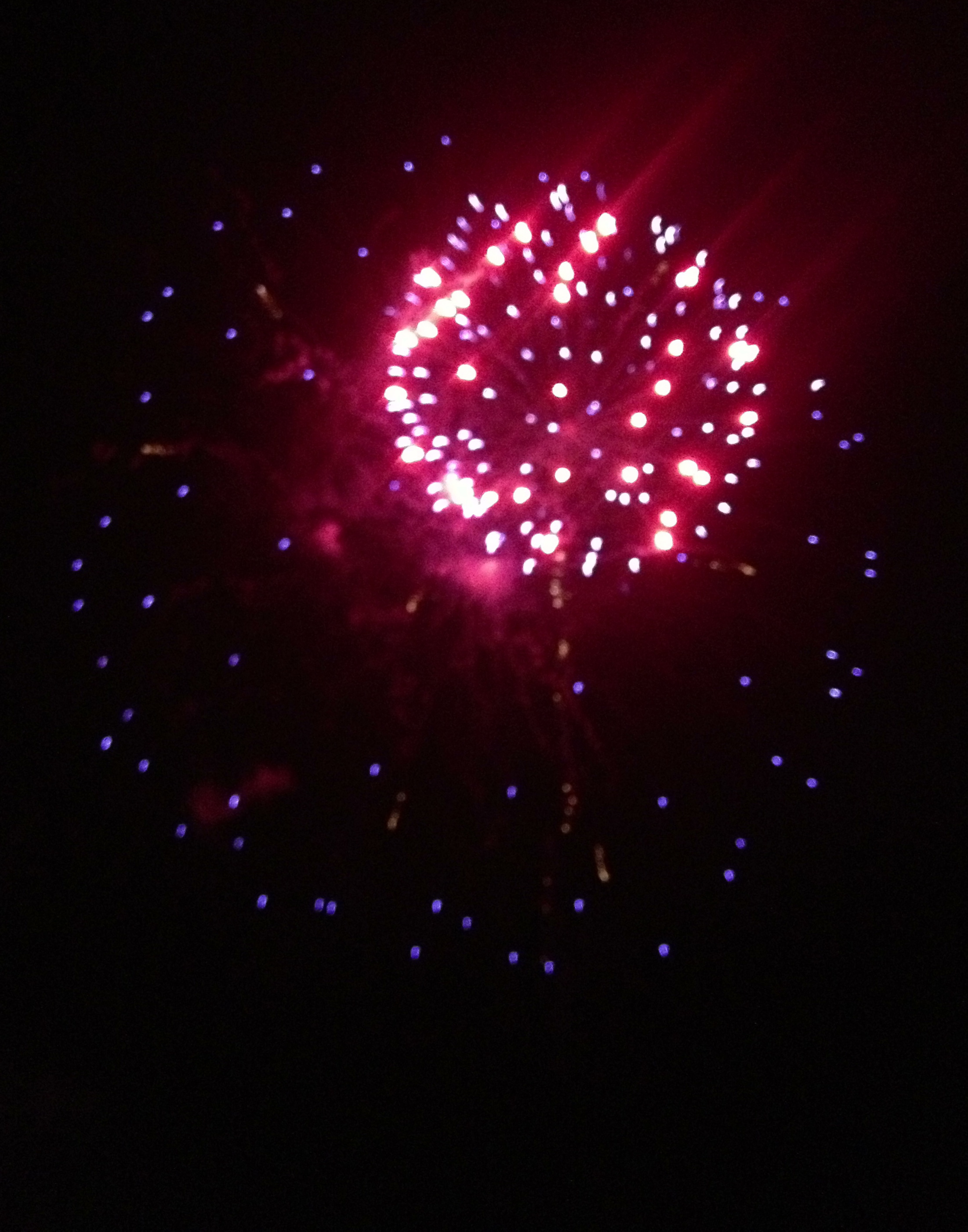
IMG_0703


It’s the 4th of July Weekend. Are you a fireworks YAY person or a firework NAY person? Either way, this post should prompt some sparks.


Instructions

  1. Write down 2o words or phrases that you associate with fireworks.
  2. Underline one word or phrase that troubles you or feels different in tone that most of the others words.
  3. Circle one word that particularly appeals to you or is the essence of fireworks.
  4. At the top of a new piece of paper, write down the underlined word as your first word.
  5. At the bottom of the paper, write down the circled word as your last word.
  6. Write 100 to 120 words in between — a poem, story or essay.


Follow Up Writing

  • If fireworks were an animal, what would they be?
  • If fireworks were music, what style would they be?
  • If fireworks were an emotion, what would it be?

Use the answers to the above three questions to fashion a poem or one-page story.

Writing Group Variation

  1. Did you see fireworks growing up as a child? Share your experiences with the rest of the group (about 3 minutes each) — Where did you see them? With whom did you watch them? Were you delighted, scared, both, something else?
  2. If you never watched fireworks, write about about another summer tradition that takes place at night.

Postponed Until Monday: Further Rant Writing and Variations for Writing Groups


Let It All Out

July 2, 2014  Prompt #61

IMG_0672


Today’s prompt is all about the rant. The “shout, shout, let it all out,” break-the-rules writing that demands you your speak your mind without apology.


Instructions

  1. Scribble down attitudes and actions that infuriate you. List big issues, like poverty, or smaller ones, like not using your turn signal. Write for 5 minutes.
  2. Include both general, such as human greed, and specific, such as leaving dirty dishes in a shared sink.
  3. Re-read what you’ve written and underline a phrase or sentence that resonates for you.
  4. Write that phrase on the top of a new sheet of paper.  Write for 20 minutes.

Hints for Good Rant Writing

  • Choose a topic about which you feel passionate.
  • Let yourself go off on tangents.
  • Let yourself be angry. Let yourself be funny. Let yourself be both.

Tomorrow: Further Rant Writing and Variations for Writing Groups


Genre Swap

June 28, 2014  Prompt #57

photoTo wrap up revisions week, here’s a playful prompt. See if you discover anything about your writing (or yourself!) with this one.

Instructions

  1. Choose a section of a story or essay you’ve written that is about a page long. Or choose a single piece of flash fiction or a short to medium-length poem.
  2. Rewrite the piece in a different genre. If it is literary fiction, for instance, try writing it in the style of traditional criminal mystery novel. If it is an critical essay, say the same thing in verse. Change a poem into investigative journalism.
  3. Write for 15 minutes.


Further Writing

  • Read what you’ve written aloud. Circle a favorite phrase or sentence. Can it be reworked into the original piece before the genre swap?
  • What style of writing intimates you the most? Try writing in that style — on any topic — for 20 minutes.

Writing Group Variations

  1. Each members fills out three index cards.
    • On the first card, write the name of a genre, such as high romance, free verse poetry, or critical review.
    • On the second card, describe a person or object. (A swimming instructor. A 9-year-old boy. A razor blade. A wooden spoon)
    • On the third card, write the name of a geographic place (Times Square in NYC. Texas Hill Country. A marsh.)
  2. Put the cards into three separate piles — genres, person/object, and geographic place.
  3. Each member draws one card from each pile and, using the genre, person or object, and place, writes for 15 minutes.


Inspiration Everywhere: Maya Angelou

June 2, 2014.  Prompt #33

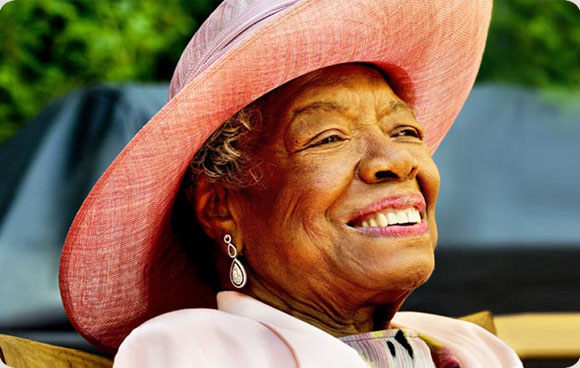
mayaAs a writer, I am often asked, “Where do you find your inspiration?” That question always surprises me, as I find inspiration everywhere. In this week’s posts, I’ll offer a variety of people, places, and instances that may inspire you.  Using your writer’s notebook, track what engages you throughout the day.


Maya Angelou

Last week, writer, performer, professor, and activist Dr. Maya Angelou died.  My Facebook feed was filled with tributes and quotes. This was among my favorites: Courage is the most important of all the virtues, because without courage you can’t practice any other virtue consistently.

Instructions

  1. For five minutes, free write about the word courage. Include whatever associations—people, places, situations—arise.
  2. Next, for ten minutes, write about a time when you acted courageously, in either word or action, either big or small.

Further Writing

  • Write about a time when you (or your character) were not as courageous as you wished you’d been.  Was there a time when you missed an opportunity to act courageously?
  • My father used a say, “Discretion is the better part of valor”  (originally “The better part of valoris discretion,” from Shakespeare’s Henry IV.)  Write about the difference between valor and courage and the complexity of courageous acts.

Variations for Writing Groups

  1. On an index card, write a short description of a real or imagined courageous act.
  2. Place the cards in the middle of the table and choose one to write about for 15 minutes.
  3. Discuss the power of big vs. understated courageous acts. What are the challenges of writing about each of them?


Circle Round

June 1, 2014  Prompt #32

Photo

My tea dish with a tea strainer tea stain. (which washed right out.)

Let’s run around in circles for this week’s Sunday Shapes. Like last week’s square, writing about circles helps you consider language closely and link images with people, actions or memories and build upon abstract ideas.

One word of caution: Because the circle is such a ubiquitous shape in our world, be careful about falling into cliches. Keep your circular writing fresh and specific.


Instructions

  1. For five minutes, jot down associations, phrases, and images that come to mind when you hear the word “circle.”
  2. Read over what you’ve written and circle (!) a phrase or sentence that stands out for you.
  3. Write that phrase on the top of a new sheet of paper.  Write for 15 minutes.

Further Writing

  • Choose one of these phrases as your springboard: Full Circle. Inner Circle. Vicious Circle. Circle the Wagons. Write for 15 minutes.
  • Draw a circle with a crayon or with a stick in the sand or the dirt. Draw a circle with lipstick on a mirror. Circle a word you don’t know in the dictionary.  Write about it for 10-minutes.

Variations for Writing Groups

  1. On individual index cards, each member writes down two things that are circular (one per card). For example, “A Peach Pie.”  “An Astrology chart.” “A bicycle tire.”
  2. On a second set of cards, each member writes down two short descriptions of a person (one per card). For example, “a balding bouncer at a dimly-lit club.”   “A grey-haired woman with a deck of cards,” “An 8-year old wearing a wig.” (Note sure how the hair theme crept in, but there you have it…)
  3. Keep the two sets of phrases in separate piles.
  4. Each member chooses one card from each pile and uses the description of the person and the round object as their prompt. For instance, ” After just a moment of hesitation, the 8-year-old tosses off the wig and digs into the peach pie.” What happened just before this? What happens next?

And Finally…

How can we talk about circles without mentioning Joni?

“And the seasons they go round and round,
And the painted ponies go up and down,
We’re all captive on the carousel of time
We can’t return we can only look behind
From where we came
And go ’round and ’round and ’round
In the circle game.”


The Task At Hand

basement artist

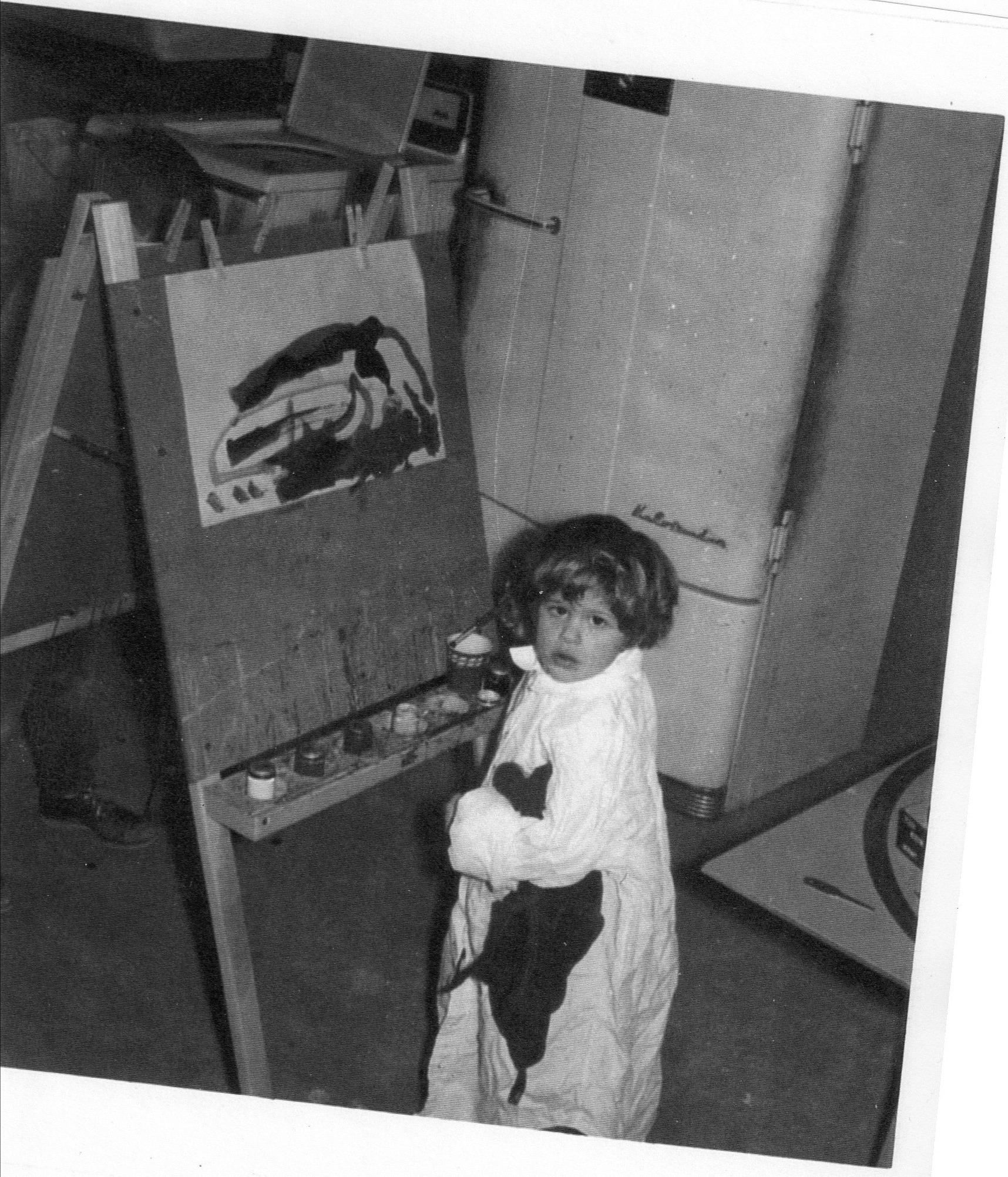
Here’s 6-year-old me in a BIG smock provided by longtime family friend Helene Hemmendinger. Eric H. is working the other side of the easel.

May 30, 2014  Prompt #30

Do you have a favorite item of clothing that you wear for a particular task? A gardening shirt, a well-loved apron, a pair of road trip blue jeans?  This item of clothing will be your touchstone for the following prompts. If you don’t have a particular garment that fits this description, choose something that is meaningful to you in another way.

Ann Brashares wrote an entire series of books that revolved around a pair of blue jeans — The Sisterhood of the Traveling Pants. Of course, the books are not really about the pants; they are about friendship, loyalty, and growing up.  What larger themes will emerge from your writing?


Instructions

  1. For five minutes, write a physical description of your clothing choice. Describe its style, fabric, and color. Does it have tears or stains? Where and when did you acquire it?
  2. Put on the item of clothing. Do you feel connected to the task for which you generally wear it? (Time to bake raisin oatmeal cookies! Time to weed around the stoop or feed the horses!) Write about your connection to the piece of clothing, how it came to be your painting, hiking, or “clean the gutter” garment. Write for 15 minutes.

Further Writing

  • Write about someone else’s “go-to” clothes. For instance, my father had a pair of frayed blue shorts he gardened in for twenty years, until my mother decided they so worn-thin they were “obscene.”  She tossed them.

Variations for Writing Groups

  1. Each member brings in a piece of clothing they associate with a particular use.  For a few minutes each, talk about your clothing choice with the group.
  2. Next, for 15 minutes, write about how you feel when you wear it.
  3. Fictional turn: write about someone who panics when they cannot find a specific piece of clothing. Can they not go out on a date because they can’t find their green high-tops? Do they give up on working in their studio because their perfectly worn, perfectly paint-splattered Oxford shirt is missing?

What did you think of this writing prompt? Share your thoughts.

Go back

Your message has been sent

Warning
Warning
Warning
Warning
Warning

Warning.

Outer Wraps

Marilyn Kestenbaum with well-wrapped family.

May 28, 2014  Prompt #28

Today, we turn to jackets and coats. What can we learn from writing about blazers, parkas, windbreakers, and leather jackets? From topcoats, overcoats, pea coats, and trench coats?

Coats can be metaphors for protection and for burden, helping ground your writing with tangible details.


Instructions

  1. Choose a coat from your closet.  For five minutes, write a physical description of it. Describe its style, fabric, color, and condition. Does it have a scent? Is it a dress coat? An everyday coat? Where, when and how did you acquire it?
  2. Put the coat on. How does it fit? (If it is too hot to be wearing this coat, try to recall what it feels like to put it on in the winter or fall.) Is it loose or tight? Does it itch? What sounds do you hear when you zip, snap, or button?  Write about this for five more minutes.
  3. Next, mixing in the descriptions above, write about your connection with the coat. How do you feel wearing it? Stylish? Protected? Constricted? Where have you worn it to? Do you associate the coat with a person, place, or stage of your life?  Tell your story.

Further Writing

  • Write about your coat from another point of view. Imagine  you gave this coat away and someone bought it at a thrift store. Tell their story.
  • Find a photo of you, someone you know, or a stranger wearing a coat. Write a poem or micro-fiction about this person.

Variations for Writing Groups

  1. Take a field trip to a vintage clothing store or a thrift shop.  Try on coats. Take notes about the fit, the fabric, the style.
  2. Take photos. Write about the experience from your own point of view or from the perspective of a fictional character.

What did you think of this writing prompt? Share your thoughts.

Go back

Your message has been sent

Warning
Warning
Warning
Warning
Warning

Warning.

“Get in Shape” Sunday

May 25, 2014  Prompt #25

photoFor the next four Sundays, shapes will be our springboards. Today’s prompt helps you consider language more intricately and will perhaps move you to explore the origin of phrases. It encourages you to link images with people, actions or memories and build upon abstract ideas.

Ready to square off?


Instructions

  1. For five minutes, jot down associations, phrases, and images that come to mind when you hear the word “square.”
  2. Read over what you’ve written and circle a phrase or sentence that stands out for you.
  3. Write that phrase on the top of a new sheet of paper.  Write for 15 minutes.

Further Writing

  • Choose one of these phrases as your springboard: Square Meal. Square Dance. Fair and Square. Be There or Be Square. Times Square. Write for 15 minutes.
  • Find a piece of grid paper (or download one here or here.) Write on it in a non-traditional way, for instance, spiraling in or spiraling out, or writing in chunks on separate parts of the paper.

Variations for Writing Groups

  1. On individual index cards, each member writes down two phrases (one per card) with “square” in it. For example, Town Square. Square Deal. Hip to Be Square.
  2. On a second set of cards, each member writes down two short descriptions (one per card) of a person. For example, “thin man with a cigarette,” “young woman with a John Deere baseball cap,” “grandmother who just finished swimming 20 laps.”
  3. Keep the two sets of phrases in separate piles.
  4. Each member chooses one card from each pile and uses the description of the person and the “square expression” together as their prompt. For instance, the thin man takes a drag on his cigarette and says, “It’s hip to be square.”  What comes next?

What did you think of this writing prompt? Share your thoughts.

Go back

Your message has been sent

Warning
Warning
Warning
Warning
Warning

Warning.