Sensory Week: Sight

May 14, 2014  Prompt #13

IMG_0417

As a visual person, descriptions of what things look like fill my writing. How do I use this “visual default” in the larger service of my writing? How can give “fresh eyes” to my visual description? I created today’s prompt with such challenges in mind.

Instructions

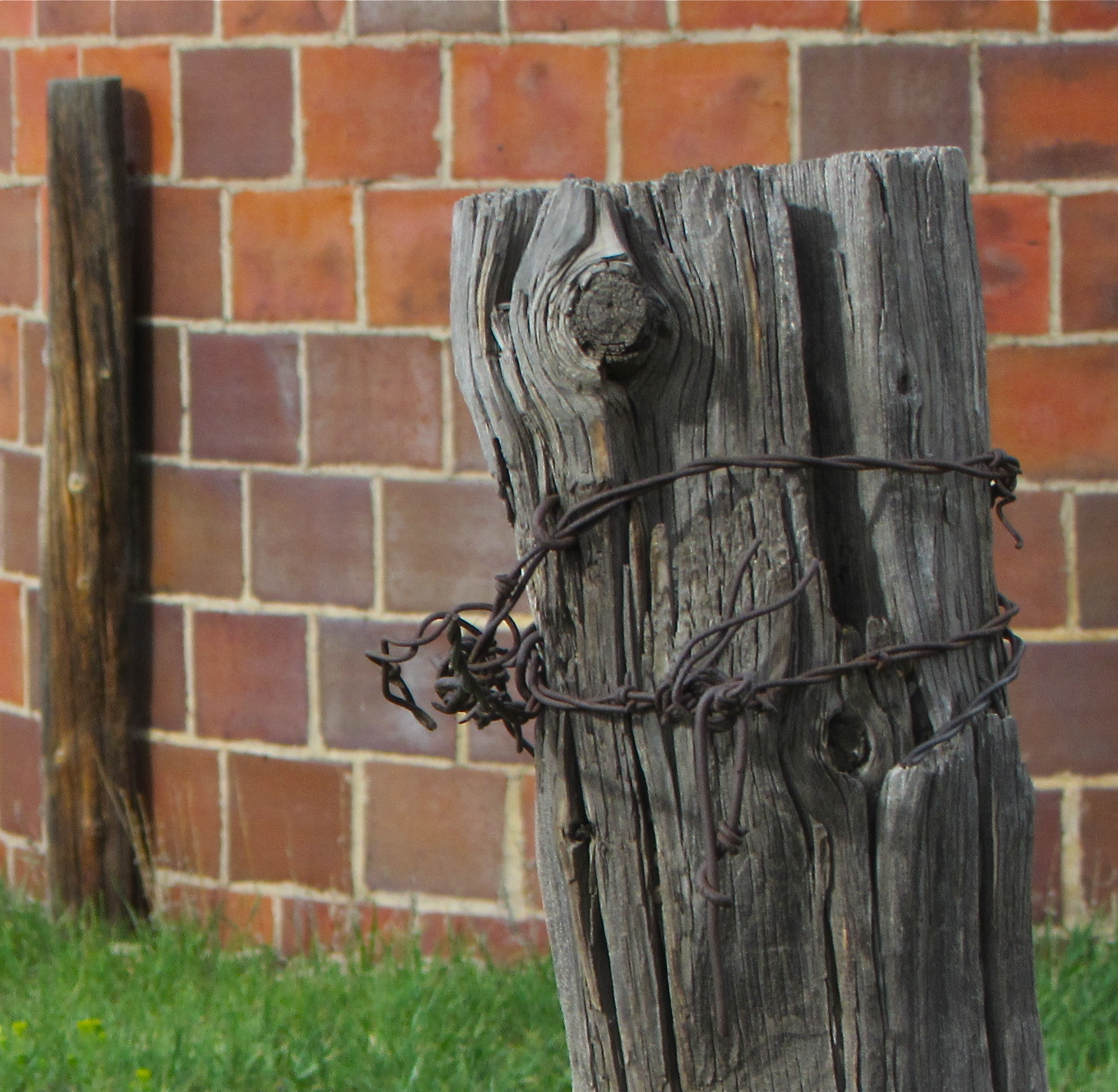
  1. Choose a familiar, perhaps everyday, object. For instance, a house key, coffee mug, hammer, or favorite chair would work well for this exercise.
  2. Before you begin writing, look at your chosen object from as many angles as possible. Did you notice anything you hadn’t seen before?
  3. For 3 minutes, write an informational-style description of the object. (For instance, “a dappled brown and white ceramic mug with thick sides and an unglazed spot. On the bottom, the letters JR 1964 are etched into the clay.”)
  4. Now, for 5 minutes, write about this object’s place in your life. How, when, and where do you interact with it? How did you come to possess it? Where is it kept? How old is it?
  5. Next, write about your personal connection (or perhaps disconnection) with the object.  Does it comfort you? Irritate you? Make you wistful? Here, integrate your observations from steps 3 & 4.  Write for 15 minutes.

Note: As always, if you are writing fiction, you can write about the object from a character’s  perspective.

How This Prompt Can Strengthen Your Writing

  • It helps you practice close observation skills.
  • It offers you the opportunity to slow down and rethink the familiar.

Further Writing

  • In a new version of your piece (keep the old one), include two or more sensory descriptions, such as texture or sound.  Re-read both pieces. How do they compare?
  • Write about the object but change one crucial fact about its physical description. How does this change change your attitude or feelings about it?
  • Write about the object from the perspective of someone else (real or fictional). Perhaps write about someone who is seeing the object for the first time or someone who adores or intensely dislikes the object.

Variations for Writing Groups

  1. Each member brings in a familiar object of their own for someone, who is unfamiliar with it, to write about.
  2. After accurately describing your familiar object, write an alternate history of it. (You didn’t find the mug in a shop in Nantucket, you discovered it while digging your garden. You swiped it from a cafe in Des Moines. Your 8-year-old made it in her ceramics class.)  Write for 15 more minutes.

What did you think of this writing prompt? Share your thoughts.

Go back

Your message has been sent

Warning
Warning
Warning
Warning
Warning

Warning.


Sensory Week: Touch

May 13, 2014  Prompt #12

IMG_1427


Our sense of touch is so important that when we want to establish if something is real, we reach out and try to touch it. What does touch tell us?  Hot. Cold. Hard. Soft. Wet. Dry. Smooth. Sharp. Rough. Ridged. Sticky. As writers, where do we go from there?


Instructions

  1. For today’s exercise, find an item to use as your “touchstone.” It might be an actual stone, or a tree trunk, a nail file, a wool sweater, a rough wash cloth, a ridged drinking class, or an old table.
  2. Touch the object with your fingers. Wrap your hand around it or bring it to your cheek.
  3. For 5 minutes, write not only about how the object feels (for instance, rough, dry and splintery) but also how the object makes you feel emotionally. Does a smooth table feel welcoming? Does a studded belt make you feel bold and exuberant?
  4. For the second step, associate the object with another object, perhaps one from your past. Bumpy ridges on a vase might remind you of hair curlers you wore as a teenager (or your aunt wore, tucked under a scarf.) The rough of a nail file might conjure up an unshaven face, the softness of a silk shirt might remind you of a long line of silk scarfs that a magician drew from a black top hat.

How This Prompt Can Strengthen Your Writing

  • Helps build sensory details in your work.
  • Gives you practice adding complexity through associations that link time and space.

Further Writing

  • Work in a simile. (The rock is smooth as the water that shaped it.  The feather is as insubstantial as this morning’s dream.
  • Choose a second item and write about it.
  • Write about a familiar item, then an unfamiliar one. How do these experiences differ?

Variations for Writing Groups

  1. Each member brings in an object in a small paper bag.
  2. Without looking into the bag, each member feels inside, jots down what they feel and tries to guess what it is. (Curved, sticky, slightly prickly — pinecone!) From there, follow Step 4 above. Write for 15 more minutes.

Preparation for Friday

Remember to find a fruit that you like or are willing to taste.

Sensory Week: Sound

May 12, 2014  Prompt #11

IMG_1281

Welcome to Sensory Week here at The Writeous Sisters.  Each day, Monday through Friday, will focus on a different sense.  Today: Hearing.

Instructions

  1. Start with a selection without words, such as a piano concerto, jazz, Big Band, or other instrumental work.
  2. Play your selection and write down whatever words, phrases, and ideas come into your head.
  3. Write for 10 minutes.


Notes

  • This is a good opportunity to loosen up. Try writing single words or short phrases. Or writing one very long sentence. Be experimental.
  • Listen to music you don’t normally listen to. If you are an opera fan, try Country Western. If you like New Age, try Rap. And visa versa.

How This Prompt Can Strengthen Your Writing

  • Offers inspiration from another creative source.
  • Works with a different part of your brain. (I have no scientific proof of this, just seems that way…)

Further Writing

  • Read what you have written.  Circle a phrase that stands out for you. Write it on top of a fresh sheet of paper. Without music, write in response to it for 15  minutes.
  • Listen to music with words.  Write in response to that for 10 minutes. Are the words distracting or helpful?
  • Write to music with words in a language you don’t know. How is this different?

Variations for Writing Groups

  1. Bring in selections of music for each other.
  2. Share what the group has written after listening to the same piece of music.  Any overlaps in thought or language?
  3. As members share their work, write down the last sentence of the writer sitting to your left. Write that sentence or phrase on a new sheet of paper. Write in response to it for 15 more minutes.

Preparation for Friday’s Prompt

Friday: Buy a fruit that you like or are willing to taste. Suggestions for good writing include an orange, mango, banana, grapefruit, tangerine, grapes, or strawberries.

Creating Atmosphere (part 2)

May 11, 2014  Prompt #10

DSCN5024Using yesterday’s exercise, choose one of the situations below and fit it into the setting you have created. Feel free, as always to change pronouns, adjective and details in the examples. Write for 15 minutes.

  • A  man is searching for something.
  • A young child is humming to herself.
  •  Two exhausted people arguing.
  •  A grandmother is teaching something to her grandson.

 Suggestions

  • Consider how the action relates to the setting. Can the setting relay information to the reader beyond spoken words? For instance, if a man is searching in a dark attic, how does the lack of light affect him? What if he’s searching on the driveway under a hot sun?
  •  As always, include sensory details. Let the reader know about sounds, odors, and textures.

How This Prompt Can Strengthen Your Writing

  • Provides practice connecting action, setting, and dialogue so they serve each other.
  • Pushes you to create a specific and vibrant place, drawing your reader in.

 Further Writing

  • Switch things up. If it’s a clear dawn, what happens if rain clouds move in?
  • Add another person to the mix. Does this ease or add tension?
  • If you have dialogue, be sure to blend it with action. If it’s hot and bright on the driveway, does a character drip with sweat? Put on sunglasses? Take off his shirt? Drink iced coffee?

Variations for Writing Groups

  1. On index cards, write down scenarios other than those listed above. Members choose a scenario and write for 15 minutes.
  2. After members share their work, each member notes a phrase or word that struck them as they listened.  Choose one of those phrases and write it on  top of a fresh sheet of paper. Write in response to it for 15 more minutes.

Creating Atmosphere

May 10, 2014  Prompt #9

IMG_0983Here’s one of my favorite kids/science nerd jokes:

Q. Why did the restaurant on the moon go out of business?
A. Because it had no atmosphere!

Like a good restaurant, good writing needs atmosphere, which I loosely define as the mood, tone, or feel of the piece. What contributes to a work’s atmosphere? At least four elements (I’m sure there are more) including word choice, writing style, details and, what we’ll focus on here, setting.

Imagine, for instance, the same conversation in a noisy Chicago diner, a near-empty, small-town Laundromat, or inside a rattling blue truck on a foggy rural road. How would these different settings reinforce the conversation or play counterpoint to it?

Instructions 

For this two-part writing exercise (more tomorrow), choose a location from the first list and a quality of light from the second list. If none of these choices inspire you, make up your own.

Location: kitchen • basement • attic • bedroom • den • sun room • living room • baby’s room • patio • driveway • hallway • laundry room

Quality of Light: dim • dusk • dark • filtered • blazing sun • gloomy • warm • cold • dawn • partly cloudy • glaring

With your location and quality of light chosen (for instance, dawn on the driveway), write your phrase on a fresh piece of paper. Write for 10 minutes, setting the physical scene.

Tips for Creating a Memorable Setting

  1. Include specifics. Is a car parked on the driveway? Does a child’s bike lie on its side? Has a recent rain washed away half a chalk drawing? Is there a long crack in the drive, always meant to be repaired?
  2. Include sensory details. What color is the sky? Is the driveway  cool or hot? Do blooming lilacs scent the air? Or is it the smell of garage, not picked up for weeks.
  3. How does your location and quality of light work together to set the tone?
  4. Don’t include characters, actions or dialogue yet. Focus on the setting the mood.

How This Prompt Can Strengthen Your Writing

  • Encourages you to observe and imagine as you combine elements.
  • Creating a strong setting adds complexity and layers to your writing.

Further Writing and Considerations

  1. Choose a different location and quality of light.
  2. Choose the same location, but a different quality of light.
  3. Choose the same quality of light, but a different location.
  4. Does the style of your writing change depending upon the setting your choose?

Variations for Writing Groups

  1. On index cards, each member writes down a location and kind of light. Or choose another variable, such as time of day, season, or weather. (Just don’t start with “It was a dark and stormy night.”)
  2. Put the index cards in two piles.
  3. Each member chooses one card from each pile and writes for 15 minutes.
  4. If possible, have members share their work. Listen for a sentence or phrase that impressed or puzzled you. Write it on the top of a fresh sheet of paper.
  5. Write in response to it for 15 more minutes.

Paint Chip Poetry

May 9, 2014  Prompt #8


paint chips Preparation  For today’s prompt, we’ll use the paint chips mentioned in the May 4th blog entry. If you haven’t already procured paint chips, try this prompt once you’ve gotten them or cut up three of more squares of different colors from magazines or catalogs.While paint chip hunting, try to find paint chips with interesting names (such as Lost Lake Blue or Summer Time Yellow). Choose 3 or 4 samples and take them home.

Instructions I’ve used this exercise many times in my writing classes. It’s usually a big hit with elementary school kids who often write startling profound stories about their colors. If you have children or other young people in your life, try it with them.

  1. From your paint chips, choose a color that particularly attracts or repels you.
  2. Looking at your color,  answer these questions.
  • If this color was a verb, what would it be?
  • If this color was an emotion, what would it be?
  • If this color was a person or an animal, who or what would it be?

For instance, if your color is Sea Green, you might write “wander,” “bored” and “mermaid” (which technically is neither a person or animal, but you have creative license.).

3. Write a sentence using your three words, such as “Sea Green is a bored mermaid, wandering the ocean in search of something new.”
4. Use that sentence as an opening line for a poem or story.  The style of writing is up to you.  Write for ten minutes.

How This Prompt Can Strengthen Your Writing

  • Encourages you to link the visual with written language.
  • Helps you make connections between seemingly unrelated concepts (color, verbs, emotions, animals.)

Further Writing

  1. Focus on just one of the questions above. For instance, if  Sea Green conjures wandering, write for ten minutes about wandering.
  2. Choose a second color and repeat the steps above.
  3. Choose the same color, then choose a new verb, emotion, and person or animal.

Variations for Writing Groups

  1. Ask everyone in the group to bring in two or more paint chips. Put them in the middle of your table. Everyone chooses one for the exercise.
  2. Ask everyone write about the same color. Afterwards, read your writing aloud. Listen for differences and overlaps. What surprised you?

Looking ahead:  Hold on to your paint chips. We’ll use them again in the weeks to come.


Interview With A Plant

curly cup gumweed

May 3, 2014  •  Exercise #2
15 to 20 minutes

Getting Started

I just got off the phone with a long-time writing friend who reminded me about this playful writing exercise: “Interview with a Plant.”

I first wrote from this prompt on a hike sponsored by Boulder’s Open Space and Mountain Parks. The instructions were to sit near a plant and “interview it,” posing questions in order to increase our awareness and appreciation. For instance, “Why do you grow in this particular place?” “Does any animal nibble on you?” etc.

After listening to the instructions, I asked, “And what if the plant answers?” The group laughed, but I decided to give voice to the plant — in this case, a Curly Cup Gumweed.

At the end of this post is my interview, which you can read before or after you write your own  interview. Choose whatever plant appeals to you — from a towering tree to creeping moss to an indoor spider plant.

Writing Tips:

  • Spending two minutes staring intently at the plant. Move around it. Look at it from above and below, if possible.
  • Make use of your senses. Touch its leaves, stem or branches. Listen with your eyes closed. Sniff.
  • Aim for six to ten questions.
  • Find an interview style that suits you. Need ideas? Imagine you are a reporter from the Washington Post or from a small town local news station or an elementary school newspaper. How would your questions differ if you were writing for the Sierra Club, Midwest Living, or Agriculture Week? What would Oprah ask this plant, what would Steven Colbert ask, what would you ask?

Again, if you are currently working on a book, you might pose your questions from the point of view of one of your characters or connect it to a theme you are already exploring.

How This Prompt Can Strengthen Your Writing

  1. It may help you break through writing resistance and start writing.
  2. It offers a point-of-view you might not have considered before.
  3. It’s a brain-stretcher!
  4. It encourages you to be outside and connect with nature, which, in my book, is always a good thing.

Follow-Up

Take one of your interview questions and rewrite it at the top of a new page. Expanding upon it, write for 15 more minutes. Be fanciful, seek metaphors, incorporate it into a larger story or go off into a whole other direction.

Have fun and have at it. Ready, set, write!

Ellen

Interview with a Curly Cup Gumweed
© Ellen Orleans 2009

Q. For the record, what is your official name?
A. Grindelia squarrosa. This is your language, not ours.

Q. Why are you gummy?
A. To trap aphids and weevils. To screen the ultra violet. To stick in your thoughts.

Q. Why are your petals yellow?
A. To entice the bees. To thank the sun.

Q. Why are your leaves serrated?
A. I once was in love with a plant named Holly.

Q. The scent of your resin reminds me of the Ponderosa Pine. Are you related?
A. She grows not far from here.

Q. Why do you have curly tendrils on your globe?
A. To spread the resin. To entrap our enemies. To honor our ancestors, the furled fern.

Q. But why are they so beautiful?
A. To whet your wonder. You marvel, don’t you?

Q. Yes.
A. Yes.

Q. How do you feel when children push your sticky cups together?
A. Their fingers will remember us all day.

Q. What’s inside your globe?
A. Milky stems. Pearl bulbs. My flesh. Fields to be.