I Remember

May 20, 2014  Prompt #19
DSCN6109 Introduction

Joe Brainard’s classic “I Remember” writing prompt has been taught in class rooms for more than 15 years. You can read more about Joe’s life and work and the history of the “I Remember” exercise here.  Below is a variation that has been a big hit in my writing workshops.


Instructions

  1. On a sheet of paper, write the phrase, I remember…. on the left side of the first line.  Skip three lines and write it again.  Repeat this until you’ve written I remember nine times.
  2. Skip another three lines and write I wish… then repeat two more times.
  3. Beginning at the top, fill in the blank space after I remember with a sentence, phrase, or even a single word. For example, I remember the first day of the fair.  I remember the last time I spoke to my brother.  I remember pecans. I remember darkness.
  4. Work your way down the list, writing for 15 to 20 minutes.

Notes

  • Pay attention to the sound of your words, their collective rhythm and pacing. Try varying short and long responses.
  • This exercise can create a stand-alone list poem or several spring boards for short stories, flash fiction, and narrative poems.
  • Try reading the finished piece aloud. What do you notice?

How This Prompt Can Strengthen Your Writing

  • Builds upon memory, often ushering you into a place of deeper connection.
  • Encourages experimentation and play.

Further Writing

  • Re-read your piece and circle repeating nouns or verbs that repeat. What patterns emerge?
  • Work the exercise from the perspective of someone else, either fictional or real.

Variations for Writing Groups

  1. Choose one of your completed I remember lines and expand upon it.
  2. Discuss one of the I wish lines with others in the group.

Thoughts on this writing prompt?

Go back

Your message has been sent

Warning
Warning
Warning
Warning
Warning

Warning.


Junk Drawer

May 19, 2014  Prompt #18

IMG_0081Instructions

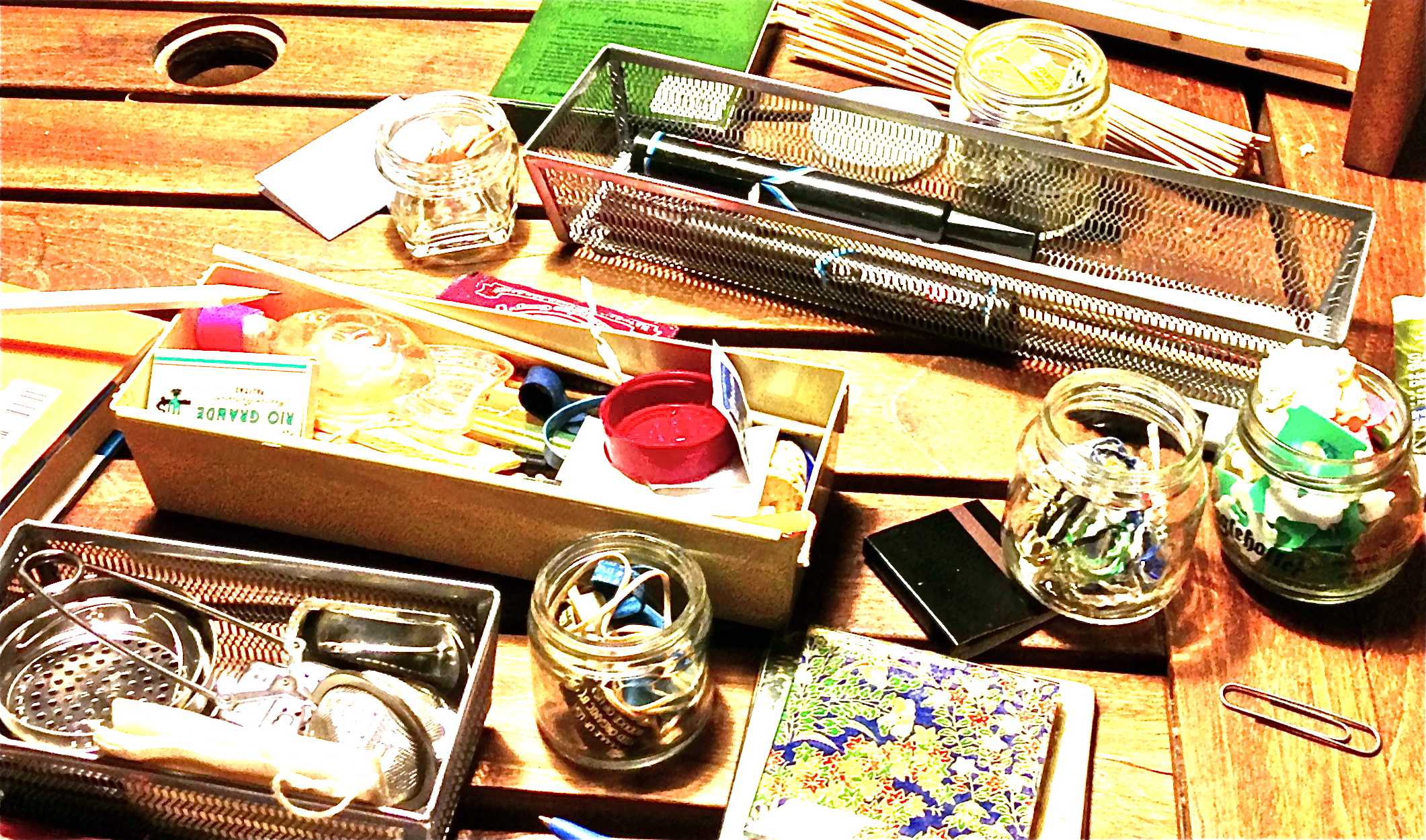
  1. Locate an object in your home that is generally considered ordinary, outdated, or unnecessary. Don’t spend too much time thinking about what to choose.  One option: If you have a junk drawer in your home or accumulated odds and ends at the bottom of a bag, close your eyes, reach for something, and use it.
  2. Write about this object as if it is something you value dearly. (Tell us why.) Use the word “surprise” once in your writing. Write for 10 minutes.
  3. Write about the same object as if it is something you no longer want, but cannot give away. (Tell us why.) Use the word “regret” once in your writing. Write for 10 minutes.

How This Prompt Can Strengthen Your Writing

  • Encourages you to look at an ordinary object in a fresh way.
  • Encourages imagination and perhaps playfulness.

Further Writing

  • Imagine someone else holding this object. What would surprise them?
  • Write as if a family member asked for this object. Why do they want it? Do you relent?

Variations for Writing Groups

  1. Ask each member to bring in one or two objects. Use them as your springboards.
  2. Write as if you discovered the object in a trunk of old table clothes in your attic or basement. You know it belongs to another family member. Write a letter to that person to accompany the returned item.

Thoughts on this writing prompt?

Go back

Your message has been sent

Warning
Warning
Warning
Warning
Warning

Warning.


Sensory Weekend: Rolling Up Your Sleeves

May 18, 2014  Prompt #17

urban-wall-crack-remove


Today features a short prompt: less background, no further writing or writing group variations. Enjoy getting your hands dirty.


Instructions

Describe an action below. Include at least four different senses.  Write for 15 minutes.

  • Digging a hole.
  • Shucking six ears of corn.
  • Plastering cracks in a wall.
  • Building a ceramic vase out of clay.
  • Handwashing a wool sweater in a tub of water.


What did you think of this writing prompt? Share your thoughts.

Go back

Your message has been sent

Warning
Warning
Warning
Warning
Warning

Warning.


Sensory Weekend: Smokin’

May 17, 2014  Prompt #16

cigar smoke


Today and tomorrow feature short prompts: less background, no writing group variations. Have a good weekend!


Surgeon General’s Warning

If you are not a smoker, don’t light up to complete this exercise. Work from memory or sit near smokers and take notes.

Instructions

    1. Write for 10 minutes about tobacco (cigarette, cigar or pipe) smoke, either first- or second-hand. Consider how it smells, tastes, and looks.
    2. Write down six adjectives and six verbs that describe smoke or your experience of it. Integrate some of these words into your piece. Write for 10 more minutes.

Further Writing

    1. Write about entering a room that smells of cigar smoke.
    2. Write about someone blowing smoke rings.

What did you think of this writing prompt? Share your thoughts.

Go back

Your message has been sent

Warning
Warning
Warning
Warning
Warning

Warning.


Sensory Week: Taste

May 16, 2014  Prompt #15

orangesTo wrap up Sensory Week, it’s our long-awaited taste prompt. To enrich this exercise, I’ve included other senses as well.  Tuck a napkin under your chin and let’s get started.


Instructions

  1. Choose a fruit that you enjoy (or dislike) for this exercise. Other foods can work too; you may need to adjust the instructions. Follow the steps below, noting experiences, associations, and responses.
  2. Hold the fruit in your hand. Briefly describe its weight and texture.
  3. Smell the fruit. Does your mouth start watering? Puckering?
  4. Peel the fruit, stopping frequently to describe the experience, noting memories and questions that arise. If the fruit isn’t peel-able, skip this step or slice the fruit instead.
  5. Touch the fruit to your tongue. First impressions?
  6. Section or slice the fruit if needed, then take a small bite.  How do your tongue, lips, and mouth react? Describe the experience.
  7. Continue eating. Continue writing.

How This Prompt Can Strengthen Your Writing

  • Encourages you to write slowly and thoughtfully, since several steps are involved.
  • Helps you bring sensory details into your work.
  • Encourages association and memory recall.

Further Writing

  • Imagine a person eating this fruit for the first time. What would surprise them?
  • Describe how different people might approach eating a pineapple, pear, or banana. How does how they eat reflect who they are?

Variations for Writing Groups

  1. If the season is right (usually late summer or fall in the U.S.), try tasting and describing three different apple varieties.
  2. If available, compare, and describe eating an orange, tangerine, and blood orange. Or a standard lemon and a Meyer lemon. Or a grapefruit, orange, lemon, and lime. What do these different fruits conjure up for you?
  3. If available, try a fruit that is new to you. Some fruits I hadn’t eaten as a child include a star fruit (or carambola), horned melon (or kiwano), and even a fresh fig.

What did you think of this writing prompt? Share your thoughts.

Go back

Your message has been sent

Warning
Warning
Warning
Warning
Warning

Warning.


Sensory Week: Smell

May 15, 2014  Prompt #14


This is among my favorite prompts, since smell brings up specific associations and memories. Plus, it’s fun to smell stuff.


Instructions

  1. Find something in your house with a specific scent or odor. Looking for ideas? Consider one of these: a lemon, garlic bulb, crayons, chalk, perfume or cologne, nail polish remover, a leather baseball glove, a block of cedar, sawdust, cloves or a cinnamon stick, vinegar. (Don’t use anything toxic, of course.)
  2. Close your eyes, bring the item to your nose, and inhale. Relax your brain and let memories and associations surface. Repeat twice more.
  3. For 15 minutes, write in response to this smell.  If, during your writing, it helps to take in the scent of the item again, sniff away!  If you need to ground your piece, write about the place with which you most associate this scent.

How This Prompt Can Strengthen Your Writing

  • Since smells are not easily categorized,  you need to think specifically about the individual scent.
  • Since smells are deeply evocative, this prompt encourages association and memory recall.

Further Writing

  • Write about the person with whom you most associate this smell.
  • Write about a different scent.  If you first wrote about a pleasing scent, try writing about a harsh one.

Variations for Writing Groups

  1. Each member brings, in a sealed and separate plastic containers, two or more object with a strong scent. Cotton balls dabbed in perfume, alcohol, pine cleaner, or vinegar work well, as well as any of the items listed above.
  2. Group members close their eyes, sniff the scents, and guess what they are.
  3. Discuss your experience of the scents with each other.
  4. Write down an action or emotion associated with the scent. (Vinegar is fear, running from the housekeeper who teases me with the open bottle.  Baking chicken is Friday night, our kitchen transformed by oranges, dripping fat, and a full table.)  From here, write for 15 more minutes.

What did you think of this writing prompt? Share your thoughts.

Go back

Your message has been sent

Warning
Warning
Warning
Warning
Warning

Warning.


Sensory Week: Sight

May 14, 2014  Prompt #13

IMG_0417

As a visual person, descriptions of what things look like fill my writing. How do I use this “visual default” in the larger service of my writing? How can give “fresh eyes” to my visual description? I created today’s prompt with such challenges in mind.

Instructions

  1. Choose a familiar, perhaps everyday, object. For instance, a house key, coffee mug, hammer, or favorite chair would work well for this exercise.
  2. Before you begin writing, look at your chosen object from as many angles as possible. Did you notice anything you hadn’t seen before?
  3. For 3 minutes, write an informational-style description of the object. (For instance, “a dappled brown and white ceramic mug with thick sides and an unglazed spot. On the bottom, the letters JR 1964 are etched into the clay.”)
  4. Now, for 5 minutes, write about this object’s place in your life. How, when, and where do you interact with it? How did you come to possess it? Where is it kept? How old is it?
  5. Next, write about your personal connection (or perhaps disconnection) with the object.  Does it comfort you? Irritate you? Make you wistful? Here, integrate your observations from steps 3 & 4.  Write for 15 minutes.

Note: As always, if you are writing fiction, you can write about the object from a character’s  perspective.

How This Prompt Can Strengthen Your Writing

  • It helps you practice close observation skills.
  • It offers you the opportunity to slow down and rethink the familiar.

Further Writing

  • In a new version of your piece (keep the old one), include two or more sensory descriptions, such as texture or sound.  Re-read both pieces. How do they compare?
  • Write about the object but change one crucial fact about its physical description. How does this change change your attitude or feelings about it?
  • Write about the object from the perspective of someone else (real or fictional). Perhaps write about someone who is seeing the object for the first time or someone who adores or intensely dislikes the object.

Variations for Writing Groups

  1. Each member brings in a familiar object of their own for someone, who is unfamiliar with it, to write about.
  2. After accurately describing your familiar object, write an alternate history of it. (You didn’t find the mug in a shop in Nantucket, you discovered it while digging your garden. You swiped it from a cafe in Des Moines. Your 8-year-old made it in her ceramics class.)  Write for 15 more minutes.

What did you think of this writing prompt? Share your thoughts.

Go back

Your message has been sent

Warning
Warning
Warning
Warning
Warning

Warning.


Sensory Week: Touch

May 13, 2014  Prompt #12

IMG_1427


Our sense of touch is so important that when we want to establish if something is real, we reach out and try to touch it. What does touch tell us?  Hot. Cold. Hard. Soft. Wet. Dry. Smooth. Sharp. Rough. Ridged. Sticky. As writers, where do we go from there?


Instructions

  1. For today’s exercise, find an item to use as your “touchstone.” It might be an actual stone, or a tree trunk, a nail file, a wool sweater, a rough wash cloth, a ridged drinking class, or an old table.
  2. Touch the object with your fingers. Wrap your hand around it or bring it to your cheek.
  3. For 5 minutes, write not only about how the object feels (for instance, rough, dry and splintery) but also how the object makes you feel emotionally. Does a smooth table feel welcoming? Does a studded belt make you feel bold and exuberant?
  4. For the second step, associate the object with another object, perhaps one from your past. Bumpy ridges on a vase might remind you of hair curlers you wore as a teenager (or your aunt wore, tucked under a scarf.) The rough of a nail file might conjure up an unshaven face, the softness of a silk shirt might remind you of a long line of silk scarfs that a magician drew from a black top hat.

How This Prompt Can Strengthen Your Writing

  • Helps build sensory details in your work.
  • Gives you practice adding complexity through associations that link time and space.

Further Writing

  • Work in a simile. (The rock is smooth as the water that shaped it.  The feather is as insubstantial as this morning’s dream.
  • Choose a second item and write about it.
  • Write about a familiar item, then an unfamiliar one. How do these experiences differ?

Variations for Writing Groups

  1. Each member brings in an object in a small paper bag.
  2. Without looking into the bag, each member feels inside, jots down what they feel and tries to guess what it is. (Curved, sticky, slightly prickly — pinecone!) From there, follow Step 4 above. Write for 15 more minutes.

Preparation for Friday

Remember to find a fruit that you like or are willing to taste.

Sensory Week: Sound

May 12, 2014  Prompt #11

IMG_1281

Welcome to Sensory Week here at The Writeous Sisters.  Each day, Monday through Friday, will focus on a different sense.  Today: Hearing.

Instructions

  1. Start with a selection without words, such as a piano concerto, jazz, Big Band, or other instrumental work.
  2. Play your selection and write down whatever words, phrases, and ideas come into your head.
  3. Write for 10 minutes.


Notes

  • This is a good opportunity to loosen up. Try writing single words or short phrases. Or writing one very long sentence. Be experimental.
  • Listen to music you don’t normally listen to. If you are an opera fan, try Country Western. If you like New Age, try Rap. And visa versa.

How This Prompt Can Strengthen Your Writing

  • Offers inspiration from another creative source.
  • Works with a different part of your brain. (I have no scientific proof of this, just seems that way…)

Further Writing

  • Read what you have written.  Circle a phrase that stands out for you. Write it on top of a fresh sheet of paper. Without music, write in response to it for 15  minutes.
  • Listen to music with words.  Write in response to that for 10 minutes. Are the words distracting or helpful?
  • Write to music with words in a language you don’t know. How is this different?

Variations for Writing Groups

  1. Bring in selections of music for each other.
  2. Share what the group has written after listening to the same piece of music.  Any overlaps in thought or language?
  3. As members share their work, write down the last sentence of the writer sitting to your left. Write that sentence or phrase on a new sheet of paper. Write in response to it for 15 more minutes.

Preparation for Friday’s Prompt

Friday: Buy a fruit that you like or are willing to taste. Suggestions for good writing include an orange, mango, banana, grapefruit, tangerine, grapes, or strawberries.

Creating Atmosphere

May 10, 2014  Prompt #9

IMG_0983Here’s one of my favorite kids/science nerd jokes:

Q. Why did the restaurant on the moon go out of business?
A. Because it had no atmosphere!

Like a good restaurant, good writing needs atmosphere, which I loosely define as the mood, tone, or feel of the piece. What contributes to a work’s atmosphere? At least four elements (I’m sure there are more) including word choice, writing style, details and, what we’ll focus on here, setting.

Imagine, for instance, the same conversation in a noisy Chicago diner, a near-empty, small-town Laundromat, or inside a rattling blue truck on a foggy rural road. How would these different settings reinforce the conversation or play counterpoint to it?

Instructions 

For this two-part writing exercise (more tomorrow), choose a location from the first list and a quality of light from the second list. If none of these choices inspire you, make up your own.

Location: kitchen • basement • attic • bedroom • den • sun room • living room • baby’s room • patio • driveway • hallway • laundry room

Quality of Light: dim • dusk • dark • filtered • blazing sun • gloomy • warm • cold • dawn • partly cloudy • glaring

With your location and quality of light chosen (for instance, dawn on the driveway), write your phrase on a fresh piece of paper. Write for 10 minutes, setting the physical scene.

Tips for Creating a Memorable Setting

  1. Include specifics. Is a car parked on the driveway? Does a child’s bike lie on its side? Has a recent rain washed away half a chalk drawing? Is there a long crack in the drive, always meant to be repaired?
  2. Include sensory details. What color is the sky? Is the driveway  cool or hot? Do blooming lilacs scent the air? Or is it the smell of garage, not picked up for weeks.
  3. How does your location and quality of light work together to set the tone?
  4. Don’t include characters, actions or dialogue yet. Focus on the setting the mood.

How This Prompt Can Strengthen Your Writing

  • Encourages you to observe and imagine as you combine elements.
  • Creating a strong setting adds complexity and layers to your writing.

Further Writing and Considerations

  1. Choose a different location and quality of light.
  2. Choose the same location, but a different quality of light.
  3. Choose the same quality of light, but a different location.
  4. Does the style of your writing change depending upon the setting your choose?

Variations for Writing Groups

  1. On index cards, each member writes down a location and kind of light. Or choose another variable, such as time of day, season, or weather. (Just don’t start with “It was a dark and stormy night.”)
  2. Put the index cards in two piles.
  3. Each member chooses one card from each pile and writes for 15 minutes.
  4. If possible, have members share their work. Listen for a sentence or phrase that impressed or puzzled you. Write it on the top of a fresh sheet of paper.
  5. Write in response to it for 15 more minutes.