This I Believe (part 2)

May 22, 2014  Prompt #22

DSCN3261


Today’s post builds on yesterday’s This I Believe prompt, offering follow-up exercises and options for writing groups. If you haven’t already read my May 21 post or listened to or read sample essays on the This I Believe website, do that now.


Further Writing

  • Choose a value or activity that is not one of your core beliefs, then write a convincing essay celebrating your deep conviction of it. I, for example, might write, “I believe in boasting.” or “I believe in the redemptive power of American Idol.” You can take on another persona as you write or write in your own voice. Write for 20 minutes.
  • Reviewing what wrote, can you see any actually core beliefs emerging from your non-beliefs? Is it freeing or unnerving to write passionately about something you are not actually passionate about?

Variations for Writing Groups

  1. Each member writes down two core beliefs (one per index card) and puts them in the middle of the table. Members randomly choose one to write about.
  2. If you are writing fiction, write a “This I Believe” essay in the voice of one of your characters.

Thoughts on this writing prompt?

Go back

Your message has been sent

Warning
Warning
Warning
Warning
Warning

Warning.


This I Believe

May 21, 2014  Prompt #21

DSCN5024Perhaps you’ve heard This I Believe essays on NPR or Bob Edwards Weekend. This I Believe is now an international organization that encourages people to write about their core values. You can read and listen to hundreds of these essays on their website.

For today’s prompt, you’ll write (or begin to write) your own “This I Believe”  essay. This exercise not only gives you the opportunity to think about the beliefs that guide you, but it also prompts you to shape your thoughts into a well-crafted work.

Instructions

  1. Go to the This I Believe website and read or listen to 2 or more essays. Click here to link to an essay I wrote ten years ago.
  2. For three minutes, free write words and phrases that come to mind when you think about what matters to you. For example,  you might write Traveling widely, Choosing kindness, Being unpredictable, or Surrounding myself with family and friends.
  3. Next, for five minutes, think about concrete examples of these core beliefs. Don’t be afraid of making odd connections; in fact, sometimes, the odder the better.  “I believe in power of balloon animals” could be the perfect lead in for writing about kindness. Or, if you believe in surrounding yourself with friends and family, consider actions that demonstrate this.  You might write, “I believe in celebrating birthdays — with 100 of my closest friends and relatives.” Or, “I believe in Family Reunions.”
  4. Finally, writing for fifteen more minutes, flesh out your ideas. Experiment, expand, and shape your story.

Notes

  • Bring together the conceptual and concrete. Use specifics to ground your essay, yet don’t be afraid to celebrate or uphold your beliefs with heartfelt or even noble language.
  • Try different tones: playful, earnest, contemplative.

Tomorrow’s Post: Suggestions for “Further Writing” and “Variations for Writing Groups.”

Thoughts on this writing prompt?

Go back

Your message has been sent

Warning
Warning
Warning
Warning
Warning

Warning.


I Don’t Remember

May 20, 2014  Prompt #20

IMG_0620 Today’s prompt turns yesterday’s “I Remember” exercise on its head.  “I Don’t Remember” motivates you to write about loss,  failure of memory, and what we repress. Use it to remember, connect, and observe.  When I’ve taught this exercise in my workshops, there’s often a lightheartedness about what our mind chooses to remember and what it forgets. Go deep, go playful, go write.


Instructions

  1. On a sheet of paper, write the phrase I don’t remember on the left side of the first line.  Skip three lines and write it again.  Repeat this until you’ve written I don’t remember twelve times. (Start a new sheet or write on the back if you need more room.)
  2. Next, fill in the blank spaces after I don’t remember with a sentence, phrase, or even a single word. For example, I don’t remember when I stopped climbing trees.  I don’t remember the last time I spoke to my brother.  I don’t remember what bus driver looked like.
  3. Work your way down the list, writing for 15 to 20 minutes.

Notes (same as yesterday’s notes.)

  • Pay attention to the sound of your words, their collective rhythm and pacing. Try varying short and long responses.
  • This exercise can create a stand-alone list poem or several spring boards for short stories, flash fiction, and narrative poems.
  • Try reading the finished piece aloud. What do you notice?

Further Writing

  • Try interspersing this sequence once or twice, I don’t remember _________, but I do remember  ______________.
  • Include specific details. Here’s one from Brainard’s book: ” I remember the only time I ever saw my mother cry. I was eating apricot pie.”

Variations for Writing Groups

  1. Choose one of your completed I don’t remember lines and expand upon it.
  2. Work in a simile. “I don’t remember why I gave away the rag wool sweater, red as the geraniums that lined our front bed, thick as the weeds that tried to choke them.

Thoughts on this writing prompt?

Go back

Your message has been sent

Warning
Warning
Warning
Warning
Warning

Warning.


I Remember

May 20, 2014  Prompt #19

DSCN6109 Introduction

Joe Brainard’s classic “I Remember” writing prompt has been taught in class rooms for more than 15 years. You can read more about Joe’s life and work and the history of the “I Remember” exercise here.  Below is a variation that has been a big hit in my writing workshops.


Instructions

  1. On a sheet of paper, write the phrase, I remember…. on the left side of the first line.  Skip three lines and write it again.  Repeat this until you’ve written I remember nine times.
  2. Skip another three lines and write I wish… then repeat two more times.
  3. Beginning at the top, fill in the blank space after I remember with a sentence, phrase, or even a single word. For example, I remember the first day of the fair.  I remember the last time I spoke to my brother.  I remember pecans. I remember darkness.
  4. Work your way down the list, writing for 15 to 20 minutes.

Notes

  • Pay attention to the sound of your words, their collective rhythm and pacing. Try varying short and long responses.
  • This exercise can create a stand-alone list poem or several spring boards for short stories, flash fiction, and narrative poems.
  • Try reading the finished piece aloud. What do you notice?

How This Prompt Can Strengthen Your Writing

  • Builds upon memory, often ushering you into a place of deeper connection.
  • Encourages experimentation and play.

Further Writing

  • Re-read your piece and circle repeating nouns or verbs that repeat. What patterns emerge?
  • Work the exercise from the perspective of someone else, either fictional or real.

Variations for Writing Groups

  1. Choose one of your completed I remember lines and expand upon it.
  2. Discuss one of the I wish lines with others in the group.

Thoughts on this writing prompt?

Go back

Your message has been sent

Warning
Warning
Warning
Warning
Warning

Warning.


Junk Drawer

May 19, 2014  Prompt #18

IMG_0081Instructions

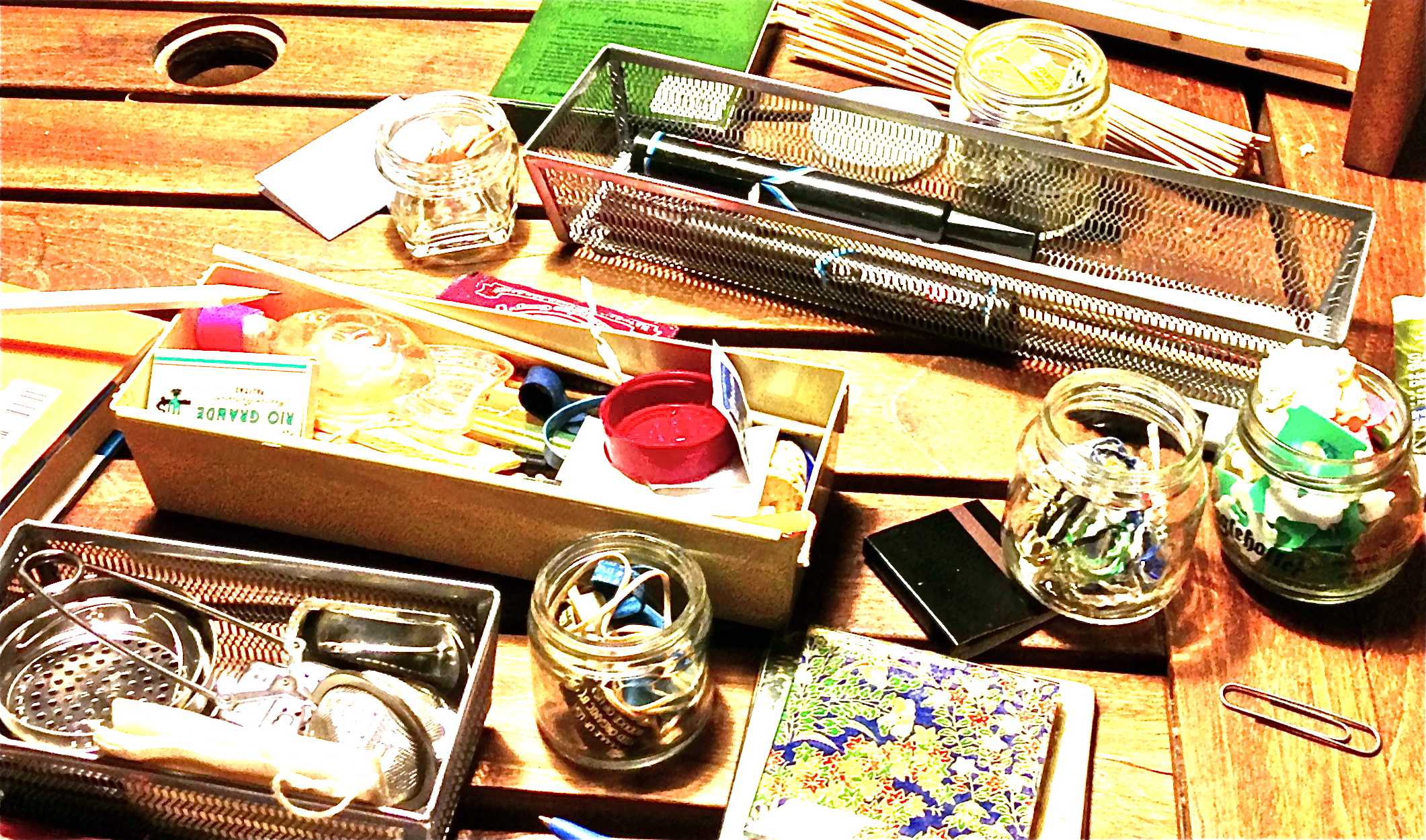
  1. Locate an object in your home that is generally considered ordinary, outdated, or unnecessary. Don’t spend too much time thinking about what to choose.  One option: If you have a junk drawer in your home or accumulated odds and ends at the bottom of a bag, close your eyes, reach for something, and use it.
  2. Write about this object as if it is something you value dearly. (Tell us why.) Use the word “surprise” once in your writing. Write for 10 minutes.
  3. Write about the same object as if it is something you no longer want, but cannot give away. (Tell us why.) Use the word “regret” once in your writing. Write for 10 minutes.

How This Prompt Can Strengthen Your Writing

  • Encourages you to look at an ordinary object in a fresh way.
  • Encourages imagination and perhaps playfulness.

Further Writing

  • Imagine someone else holding this object. What would surprise them?
  • Write as if a family member asked for this object. Why do they want it? Do you relent?

Variations for Writing Groups

  1. Ask each member to bring in one or two objects. Use them as your springboards.
  2. Write as if you discovered the object in a trunk of old table clothes in your attic or basement. You know it belongs to another family member. Write a letter to that person to accompany the returned item.

Thoughts on this writing prompt?

Go back

Your message has been sent

Warning
Warning
Warning
Warning
Warning

Warning.


Sensory Weekend: Rolling Up Your Sleeves

May 18, 2014  Prompt #17

urban-wall-crack-remove


Today features a short prompt: less background, no further writing or writing group variations. Enjoy getting your hands dirty.


Instructions

Describe an action below. Include at least four different senses.  Write for 15 minutes.

  • Digging a hole.
  • Shucking six ears of corn.
  • Plastering cracks in a wall.
  • Building a ceramic vase out of clay.
  • Handwashing a wool sweater in a tub of water.


What did you think of this writing prompt? Share your thoughts.

Go back

Your message has been sent

Warning
Warning
Warning
Warning
Warning

Warning.


Sensory Weekend: Smokin’

May 17, 2014  Prompt #16

cigar smoke


Today and tomorrow feature short prompts: less background, no writing group variations. Have a good weekend!


Surgeon General’s Warning

If you are not a smoker, don’t light up to complete this exercise. Work from memory or sit near smokers and take notes.

Instructions

    1. Write for 10 minutes about tobacco (cigarette, cigar or pipe) smoke, either first- or second-hand. Consider how it smells, tastes, and looks.
    2. Write down six adjectives and six verbs that describe smoke or your experience of it. Integrate some of these words into your piece. Write for 10 more minutes.

Further Writing

    1. Write about entering a room that smells of cigar smoke.
    2. Write about someone blowing smoke rings.

What did you think of this writing prompt? Share your thoughts.

Go back

Your message has been sent

Warning
Warning
Warning
Warning
Warning

Warning.


Sensory Week: Taste

May 16, 2014  Prompt #15

orangesTo wrap up Sensory Week, it’s our long-awaited taste prompt. To enrich this exercise, I’ve included other senses as well.  Tuck a napkin under your chin and let’s get started.


Instructions

  1. Choose a fruit that you enjoy (or dislike) for this exercise. Other foods can work too; you may need to adjust the instructions. Follow the steps below, noting experiences, associations, and responses.
  2. Hold the fruit in your hand. Briefly describe its weight and texture.
  3. Smell the fruit. Does your mouth start watering? Puckering?
  4. Peel the fruit, stopping frequently to describe the experience, noting memories and questions that arise. If the fruit isn’t peel-able, skip this step or slice the fruit instead.
  5. Touch the fruit to your tongue. First impressions?
  6. Section or slice the fruit if needed, then take a small bite.  How do your tongue, lips, and mouth react? Describe the experience.
  7. Continue eating. Continue writing.

How This Prompt Can Strengthen Your Writing

  • Encourages you to write slowly and thoughtfully, since several steps are involved.
  • Helps you bring sensory details into your work.
  • Encourages association and memory recall.

Further Writing

  • Imagine a person eating this fruit for the first time. What would surprise them?
  • Describe how different people might approach eating a pineapple, pear, or banana. How does how they eat reflect who they are?

Variations for Writing Groups

  1. If the season is right (usually late summer or fall in the U.S.), try tasting and describing three different apple varieties.
  2. If available, compare, and describe eating an orange, tangerine, and blood orange. Or a standard lemon and a Meyer lemon. Or a grapefruit, orange, lemon, and lime. What do these different fruits conjure up for you?
  3. If available, try a fruit that is new to you. Some fruits I hadn’t eaten as a child include a star fruit (or carambola), horned melon (or kiwano), and even a fresh fig.

What did you think of this writing prompt? Share your thoughts.

Go back

Your message has been sent

Warning
Warning
Warning
Warning
Warning

Warning.


Creating Atmosphere

May 10, 2014  Prompt #9

IMG_0983Here’s one of my favorite kids/science nerd jokes:

Q. Why did the restaurant on the moon go out of business?
A. Because it had no atmosphere!

Like a good restaurant, good writing needs atmosphere, which I loosely define as the mood, tone, or feel of the piece. What contributes to a work’s atmosphere? At least four elements (I’m sure there are more) including word choice, writing style, details and, what we’ll focus on here, setting.

Imagine, for instance, the same conversation in a noisy Chicago diner, a near-empty, small-town Laundromat, or inside a rattling blue truck on a foggy rural road. How would these different settings reinforce the conversation or play counterpoint to it?

Instructions 

For this two-part writing exercise (more tomorrow), choose a location from the first list and a quality of light from the second list. If none of these choices inspire you, make up your own.

Location: kitchen • basement • attic • bedroom • den • sun room • living room • baby’s room • patio • driveway • hallway • laundry room

Quality of Light: dim • dusk • dark • filtered • blazing sun • gloomy • warm • cold • dawn • partly cloudy • glaring

With your location and quality of light chosen (for instance, dawn on the driveway), write your phrase on a fresh piece of paper. Write for 10 minutes, setting the physical scene.

Tips for Creating a Memorable Setting

  1. Include specifics. Is a car parked on the driveway? Does a child’s bike lie on its side? Has a recent rain washed away half a chalk drawing? Is there a long crack in the drive, always meant to be repaired?
  2. Include sensory details. What color is the sky? Is the driveway  cool or hot? Do blooming lilacs scent the air? Or is it the smell of garage, not picked up for weeks.
  3. How does your location and quality of light work together to set the tone?
  4. Don’t include characters, actions or dialogue yet. Focus on the setting the mood.

How This Prompt Can Strengthen Your Writing

  • Encourages you to observe and imagine as you combine elements.
  • Creating a strong setting adds complexity and layers to your writing.

Further Writing and Considerations

  1. Choose a different location and quality of light.
  2. Choose the same location, but a different quality of light.
  3. Choose the same quality of light, but a different location.
  4. Does the style of your writing change depending upon the setting your choose?

Variations for Writing Groups

  1. On index cards, each member writes down a location and kind of light. Or choose another variable, such as time of day, season, or weather. (Just don’t start with “It was a dark and stormy night.”)
  2. Put the index cards in two piles.
  3. Each member chooses one card from each pile and writes for 15 minutes.
  4. If possible, have members share their work. Listen for a sentence or phrase that impressed or puzzled you. Write it on the top of a fresh sheet of paper.
  5. Write in response to it for 15 more minutes.

Paint Chip Poetry

May 9, 2014  Prompt #8


paint chips Preparation  For today’s prompt, we’ll use the paint chips mentioned in the May 4th blog entry. If you haven’t already procured paint chips, try this prompt once you’ve gotten them or cut up three of more squares of different colors from magazines or catalogs.While paint chip hunting, try to find paint chips with interesting names (such as Lost Lake Blue or Summer Time Yellow). Choose 3 or 4 samples and take them home.

Instructions I’ve used this exercise many times in my writing classes. It’s usually a big hit with elementary school kids who often write startling profound stories about their colors. If you have children or other young people in your life, try it with them.

  1. From your paint chips, choose a color that particularly attracts or repels you.
  2. Looking at your color,  answer these questions.
  • If this color was a verb, what would it be?
  • If this color was an emotion, what would it be?
  • If this color was a person or an animal, who or what would it be?

For instance, if your color is Sea Green, you might write “wander,” “bored” and “mermaid” (which technically is neither a person or animal, but you have creative license.).

3. Write a sentence using your three words, such as “Sea Green is a bored mermaid, wandering the ocean in search of something new.”
4. Use that sentence as an opening line for a poem or story.  The style of writing is up to you.  Write for ten minutes.

How This Prompt Can Strengthen Your Writing

  • Encourages you to link the visual with written language.
  • Helps you make connections between seemingly unrelated concepts (color, verbs, emotions, animals.)

Further Writing

  1. Focus on just one of the questions above. For instance, if  Sea Green conjures wandering, write for ten minutes about wandering.
  2. Choose a second color and repeat the steps above.
  3. Choose the same color, then choose a new verb, emotion, and person or animal.

Variations for Writing Groups

  1. Ask everyone in the group to bring in two or more paint chips. Put them in the middle of your table. Everyone chooses one for the exercise.
  2. Ask everyone write about the same color. Afterwards, read your writing aloud. Listen for differences and overlaps. What surprised you?

Looking ahead:  Hold on to your paint chips. We’ll use them again in the weeks to come.