The Task At Hand

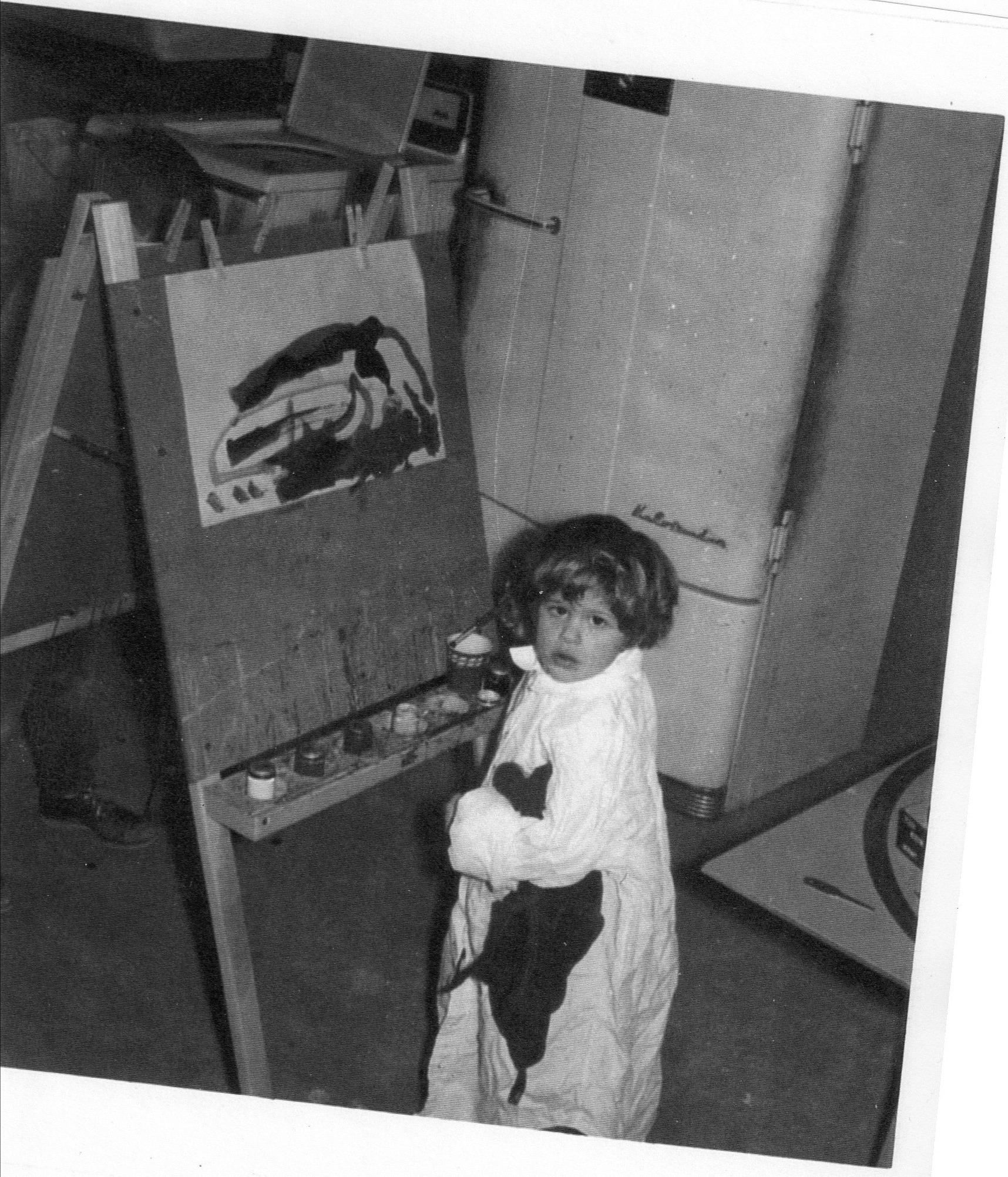
basement artist

Here’s 6-year-old me in a BIG smock provided by longtime family friend Helene Hemmendinger. Eric H. is working the other side of the easel.

May 30, 2014  Prompt #30

Do you have a favorite item of clothing that you wear for a particular task? A gardening shirt, a well-loved apron, a pair of road trip blue jeans?  This item of clothing will be your touchstone for the following prompts. If you don’t have a particular garment that fits this description, choose something that is meaningful to you in another way.

Ann Brashares wrote an entire series of books that revolved around a pair of blue jeans — The Sisterhood of the Traveling Pants. Of course, the books are not really about the pants; they are about friendship, loyalty, and growing up.  What larger themes will emerge from your writing?


Instructions

  1. For five minutes, write a physical description of your clothing choice. Describe its style, fabric, and color. Does it have tears or stains? Where and when did you acquire it?
  2. Put on the item of clothing. Do you feel connected to the task for which you generally wear it? (Time to bake raisin oatmeal cookies! Time to weed around the stoop or feed the horses!) Write about your connection to the piece of clothing, how it came to be your painting, hiking, or “clean the gutter” garment. Write for 15 minutes.

Further Writing

  • Write about someone else’s “go-to” clothes. For instance, my father had a pair of frayed blue shorts he gardened in for twenty years, until my mother decided they so worn-thin they were “obscene.”  She tossed them.

Variations for Writing Groups

  1. Each member brings in a piece of clothing they associate with a particular use.  For a few minutes each, talk about your clothing choice with the group.
  2. Next, for 15 minutes, write about how you feel when you wear it.
  3. Fictional turn: write about someone who panics when they cannot find a specific piece of clothing. Can they not go out on a date because they can’t find their green high-tops? Do they give up on working in their studio because their perfectly worn, perfectly paint-splattered Oxford shirt is missing?

What did you think of this writing prompt? Share your thoughts.

Go back

Your message has been sent

Warning
Warning
Warning
Warning
Warning

Warning.

A Tip of the Hat

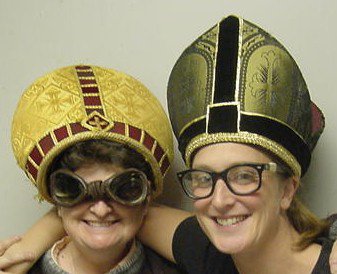
Me and my pal Magic goofing around with hats at the costume shop at the University of Colorado many years ago.

Me and my pal Magic goofing around at the costume shop at the University of Colorado many years ago.

May 28, 2014  Prompt #28

Bonnets, boaters, and bowlers. Berets and beanies. Sombreros. Stetson’s. Stovepipes. Fedoras. Fezzes. Fisherman’s caps. Coal miner helmets. Army helmets. Bike helmets.

Yes, today’s prompt is all about hats.  With their long and rich history, writing about hats can enrich characterization, provoke memories, and, again, ground your writing with specific, sensory details. Hat’s off and let’s go!

Instructions

  1. Choose a hat–yours or someone else’s–for this exercise. While it is best to have a physical hat to hold and feel, you can, alternately, look at headgear on Wikipedia or check out The Hat Blog for inspiration.
  2. Have your hat? For five minutes, write a physical and factual description of  its style, color, and condition. Write briefly about where, when and how you acquired it. If you are looking of a photo of the hat, you can imagine its history .
  3. Next, write the psychological and emotional history of the hat. Do you put it on for practical or stylish reasons? How do you feel wearing it? Do you associate the hat with a person, place, or stage of your life?  Tell your story.

Further Writing

  • Write a poem about your hat. Capture a small slice of time or a specific emotion associated with the hat. Include two or more of these words: mirror, door, sun, eyes, breeze, sturdy, light, other, tilt.
  • Write about trying on the hat of someone who has died.
  • Write about someone who is incomplete without their hat. Tell us how it transforms them.

Variations for Writing Groups

  1. Each member brings one or two hats to writing group. Take turns trying them on and snapping photos of each other with a digital camera. Choose one of the photos as your springboard and write from there.
  2. You are walking on a beach, on a city sidewalk, or in an open meadow. A stiff wind blows a hat your way and it lands two feet in front of you.  What do you do (0r what does your character do?)? Include sensory details, such as texture, temperature, and sounds.

What did you think of this writing prompt? Share your thoughts.

Go back

Your message has been sent

Warning
Warning
Warning
Warning
Warning

Warning.

Outer Wraps

Marilyn Kestenbaum with well-wrapped family.

May 28, 2014  Prompt #28

Today, we turn to jackets and coats. What can we learn from writing about blazers, parkas, windbreakers, and leather jackets? From topcoats, overcoats, pea coats, and trench coats?

Coats can be metaphors for protection and for burden, helping ground your writing with tangible details.


Instructions

  1. Choose a coat from your closet.  For five minutes, write a physical description of it. Describe its style, fabric, color, and condition. Does it have a scent? Is it a dress coat? An everyday coat? Where, when and how did you acquire it?
  2. Put the coat on. How does it fit? (If it is too hot to be wearing this coat, try to recall what it feels like to put it on in the winter or fall.) Is it loose or tight? Does it itch? What sounds do you hear when you zip, snap, or button?  Write about this for five more minutes.
  3. Next, mixing in the descriptions above, write about your connection with the coat. How do you feel wearing it? Stylish? Protected? Constricted? Where have you worn it to? Do you associate the coat with a person, place, or stage of your life?  Tell your story.

Further Writing

  • Write about your coat from another point of view. Imagine  you gave this coat away and someone bought it at a thrift store. Tell their story.
  • Find a photo of you, someone you know, or a stranger wearing a coat. Write a poem or micro-fiction about this person.

Variations for Writing Groups

  1. Take a field trip to a vintage clothing store or a thrift shop.  Try on coats. Take notes about the fit, the fabric, the style.
  2. Take photos. Write about the experience from your own point of view or from the perspective of a fictional character.

What did you think of this writing prompt? Share your thoughts.
Go back

Your message has been sent

Warning
Warning
Warning
Warning
Warning

Warning.

To A “T” [or Don’t Sweat It]

1925031_10202634790422849_1722480863_n_2

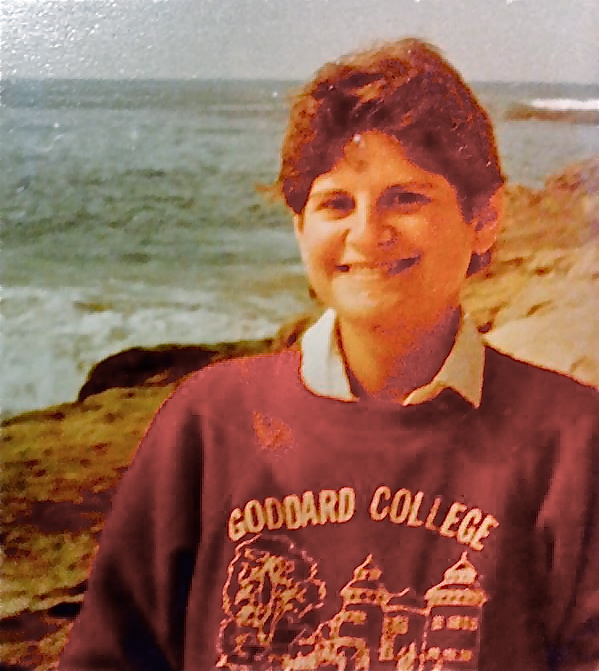
Here’s me wearing my brother Bill’s Goddard Sweatshirt in the late 1970’s. Twenty years later, I’d choose Goddard for my M.F.A in Writing Program.

May 27, 2014  Prompt #27

It’s Day Two of The Writeous Sisters’ Clothing Week.  Today’s prompt can help you ground your writing with specific, sensory details and make stronger connections between the physical and philosophical.

Inspriational Attire

The weather is warming up here in Colorado and I’m finally switching out my fleece and wool for cotton. Because I live in a small house, I store bins of off-season clothes in my garage and swap them out twice a year.  It’s become a seasonal ritual, a time to contemplate the passage of time and cycles of life. It’s also a practical opportunity to donate or recycle clothes that are worn out or that I rarely wear.  The clothes  I have the hardest time parting with, even when they are stained or frayed, are T-shirts. So many of them are associated with a specific time or place in my life.

Instructions

  1. Choose a well-loved T-shirt or sweatshirt with a logo, image, or text on it. Or, find a photo of you wearing a favorite T-shirt. Conversely, you can choose one that you dislike or feel ambivalent about but still have kept.
  2. For five minutes, write a physical and factual description of the shirt. Describe its style, color, and condition. Where, when and how did you acquire it?
  3. Next, write the psychological and emotional history of the shirt. How do you feel wearing it? Proud, hardworking, part of a team? Nostalgic or bittersweet? Do you associate the shirt with a person, place, or stage of your life?  Tell your story.

Further Writing

  • If you are currently working on a novel, consider how clothing factors into it. Do any of the characters wear T-shirts? Can you deepen characterization by including one?
  • Write about a child who outgrows a favorite T-shirt.

Variations for Writing Groups

  1. Each member brings in one or two T-shirts. You can write about the shirt you brought or someone else’s.
  2. Imagine discovering this T-shirt in a box of old beach towels after not seeing it for 10 or 20 years. Write for 20 minutes. Considerations: Is the T-shirt yours or someone else’s? Where did you last see it? How does it smell? Do you try it on?

What did you think of this writing prompt? Share your thoughts.

Go back

Your message has been sent

Warning
Warning
Warning
Warning
Warning

Warning.

A Pair of Shoes

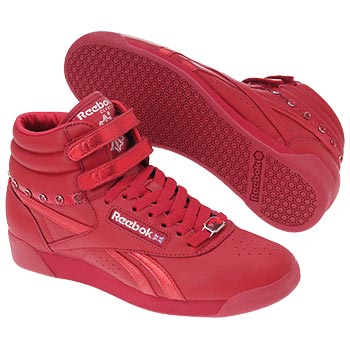
red reeboksMay 26, 2014  Prompt #26

It’s Clothing Week here at The Writeous Sisters.  All the prompts will help you connect the physical with the abstract and delve into the story of objects everywhere.

Well-Shod

Last year, the University of Colorado’s Museum of Natural History hosted “To Feel The Earth,” an exhibit about the history and tradition of moccasins among the indigenous peoples of the American Southwest. I was moved to learn about the spiritual connection that comes from feeling  soil, rocks, and grasses through the soles of our shoes. Similarly, phrases like “walk a mile in another man’s shoes” and “boots on the ground” speak the the power and symbol of shoes.

Instructions

  1. Choose a pair of shoes that you currently own or that you remember vividly.
  2. For five minutes, write down the facts of these shoes. Describe their style and color. Did you buy them new? Find them a thrift store? Did someone give them to you? When did you begin wearing them? Are they worn or still look like new?
  3. Next, write their (and your) story.  How did you feel wearing them? Athletic, stylish, sexy, competent, ashamed? Do you associate a particular person, place, or stage of your life with them?  Do you polish them? Have you thread in new laces? Did you ever get them repaired? Do you still own them? Did you outgrow them or give them away?

Further Writing

  • In poetry or micro fiction, write about strapping on or lacing up for a memorable outing in the shoes. Keep your descriptions and narrative tight.
  • As today is Memorial Day, write about a pair of Army boots.

Variations for Writing Groups

  1. Each member brings in two pairs of shoes (or photos of shoes).
  2. Each member writes descriptions of people written on separate index cards. (For instance, “Ten-year old girl, raised in Chicago, visiting New Hampshire for the first time.” “Middle-aged woman returning to an office job after 10 years working at home.”  “Wyoming car mechanic, getting ready for a date, two years after his wife has died.)
  3. Match up people with shoes. Write for 20 minutes.

See the following post “Twelve Black Shoes” for my shoe story.

What did you think of this writing prompt? Share your thoughts.
Go back

Your message has been sent

Warning
Warning
Warning
Warning
Warning

Warning.

I Remember

May 20, 2014  Prompt #19

DSCN6109 Introduction

Joe Brainard’s classic “I Remember” writing prompt has been taught in class rooms for more than 15 years. You can read more about Joe’s life and work and the history of the “I Remember” exercise here.  Below is a variation that has been a big hit in my writing workshops.


Instructions

  1. On a sheet of paper, write the phrase, I remember…. on the left side of the first line.  Skip three lines and write it again.  Repeat this until you’ve written I remember nine times.
  2. Skip another three lines and write I wish… then repeat two more times.
  3. Beginning at the top, fill in the blank space after I remember with a sentence, phrase, or even a single word. For example, I remember the first day of the fair.  I remember the last time I spoke to my brother.  I remember pecans. I remember darkness.
  4. Work your way down the list, writing for 15 to 20 minutes.

Notes

  • Pay attention to the sound of your words, their collective rhythm and pacing. Try varying short and long responses.
  • This exercise can create a stand-alone list poem or several spring boards for short stories, flash fiction, and narrative poems.
  • Try reading the finished piece aloud. What do you notice?

How This Prompt Can Strengthen Your Writing

  • Builds upon memory, often ushering you into a place of deeper connection.
  • Encourages experimentation and play.

Further Writing

  • Re-read your piece and circle repeating nouns or verbs that repeat. What patterns emerge?
  • Work the exercise from the perspective of someone else, either fictional or real.

Variations for Writing Groups

  1. Choose one of your completed I remember lines and expand upon it.
  2. Discuss one of the I wish lines with others in the group.

Thoughts on this writing prompt?

Go back

Your message has been sent

Warning
Warning
Warning
Warning
Warning

Warning.


Junk Drawer

May 19, 2014  Prompt #18

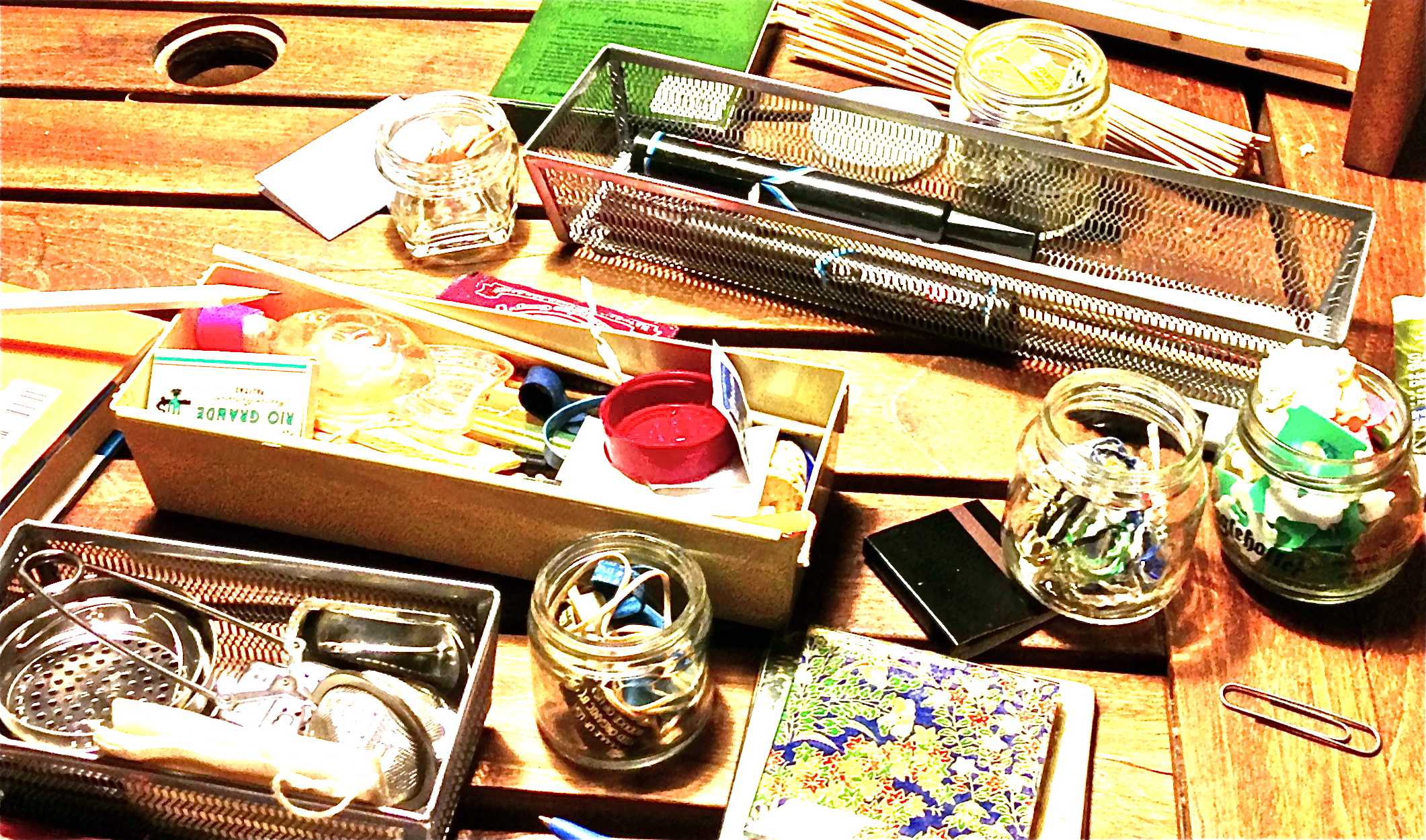
IMG_0081Instructions

  1. Locate an object in your home that is generally considered ordinary, outdated, or unnecessary. Don’t spend too much time thinking about what to choose.  One option: If you have a junk drawer in your home or accumulated odds and ends at the bottom of a bag, close your eyes, reach for something, and use it.
  2. Write about this object as if it is something you value dearly. (Tell us why.) Use the word “surprise” once in your writing. Write for 10 minutes.
  3. Write about the same object as if it is something you no longer want, but cannot give away. (Tell us why.) Use the word “regret” once in your writing. Write for 10 minutes.

How This Prompt Can Strengthen Your Writing

  • Encourages you to look at an ordinary object in a fresh way.
  • Encourages imagination and perhaps playfulness.

Further Writing

  • Imagine someone else holding this object. What would surprise them?
  • Write as if a family member asked for this object. Why do they want it? Do you relent?

Variations for Writing Groups

  1. Ask each member to bring in one or two objects. Use them as your springboards.
  2. Write as if you discovered the object in a trunk of old table clothes in your attic or basement. You know it belongs to another family member. Write a letter to that person to accompany the returned item.

Thoughts on this writing prompt?

Go back

Your message has been sent

Warning
Warning
Warning
Warning
Warning

Warning.